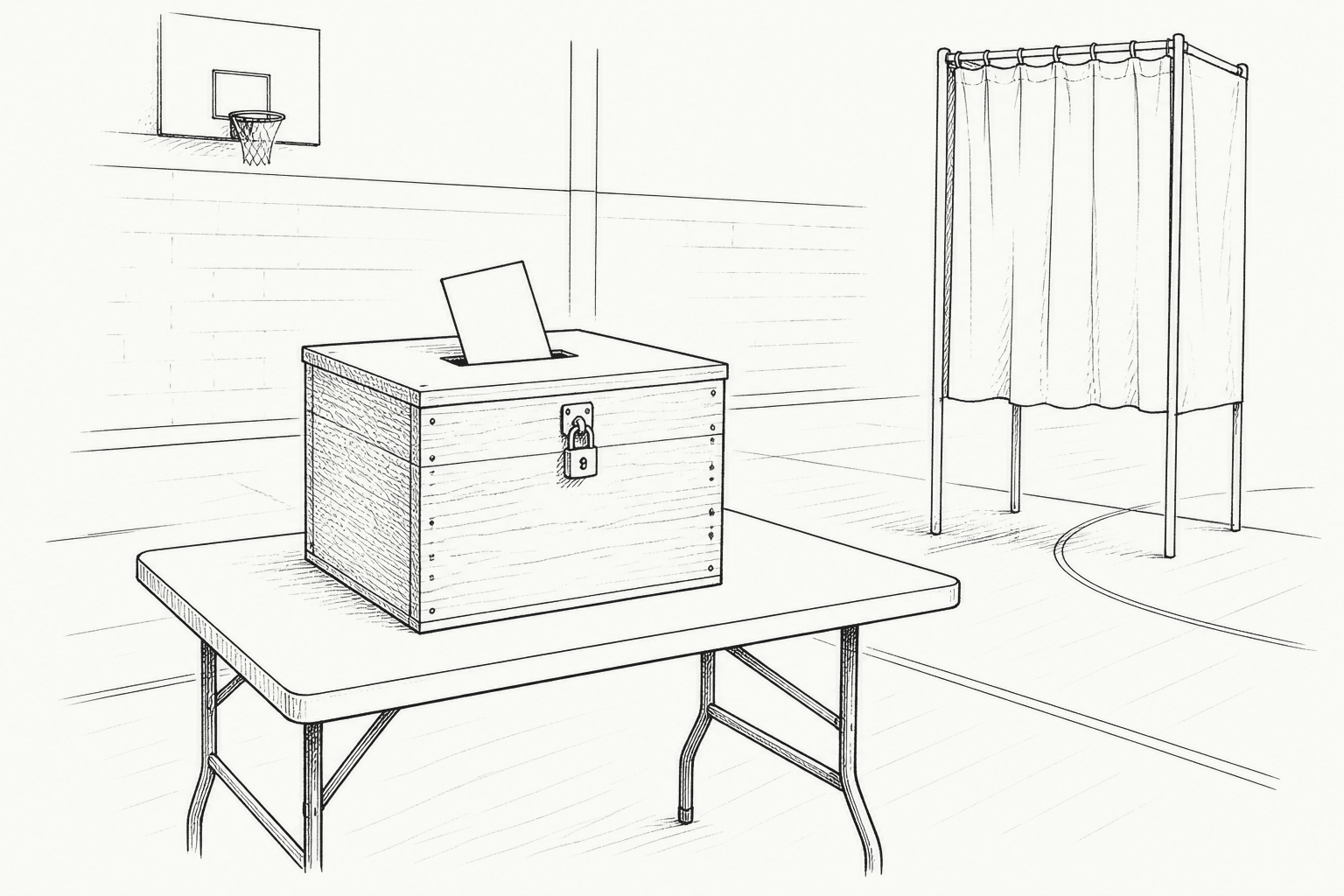

MAGDEBURG, Germany — Polls opened Sunday in the eastern German state of Saxony-Anhalt for a regional election that could put the far-right Alternative for Germany party in charge of a German state government for the first time since 1945, with pre-vote surveys giving AfD 41 percent, nearly double the 23 percent behind Chancellor Friedrich Merz's Christian Democratic Union.
A single-party AfD administration in the state of just over 2 million people would puncture the postwar political convention known as the "Brandmauer," or firewall, under which every mainstream German party has refused to govern with the AfD. Ulrich Siegmund, the AfD's 35-year-old candidate for state premier, has ruled out any coalition. "If no one wants to work with us, then we'll just have to do it alone," he told the tabloid Bild.
The math
Winning a plurality does not translate directly into power. Any party that falls below a 5 percent threshold is shut out of Germany's state parliaments and its votes are effectively discarded. If several small parties miss that bar, the AfD could convert about 43 percent of the vote into more than half the seats in the state Landtag, according to Daniel Schatz, a Berlin-based foreign policy analyst quoted by Fox News. Absent an AfD majority, incumbent CDU premier Sven Schulze is the most likely candidate to head a multiparty coalition after what Al Jazeera said could be weeks of negotiations.
The candidate
Siegmund, a former CDU member with a TikTok following of more than 700,000, appeared on Der Spiegel's August cover under the headline "Germany's most dangerous man." Saxony-Anhalt's Office for the Protection of the Constitution has classified his state party as a "confirmed far-right extremist" organization since 2023, citing what the agency called "the racist ideology of ethnopluralism." Siegmund has said he would abolish or restructure that agency, dismissing it as "a political instrument" used against the opposition, CBS News reported.
The state platform calls for a "deportation and remigration offensive," rejects proposed annual immigration caps of 200,000 as too high and draws on Austrian activist Martin Sellner's "remigration" concept, which envisions expelling asylum seekers, legal residents and German nationals of immigrant background to an unspecified African country. Migration has dominated the campaign in Magdeburg since a 2024 Christmas market attack in which a Saudi-born doctor drove into revelers, killing five.
The chancellor's warning
Merz told public broadcaster ARD "I cannot imagine international investors attending a ground-breaking ceremony with an AfD Minister-President to set up new plants and establish new businesses in Saxony-Anhalt," warning of "considerable damage" to the state. Between 15,000 and 20,000 people attended a pro-democracy rally on Saturday night, organizers told Al Jazeera.
The firewall's fallback
Even a wide AfD win may leave the party outside government. Neighboring Thuringia produced that outcome in 2024: the AfD took more seats than any rival but was excluded when smaller parties combined against it, CBS News reported. Siegmund's refusal to negotiate compounds the risk. Janek Treiber, a political scientist at Dresden University of Technology, told Fox News that AfD control of a small eastern state would deliver largely symbolic authority under Germany's federal system, with core policy levers held in Berlin.
Initial results are expected around 16:00 GMT Sunday. Voters in Mecklenburg-Western Pomerania — where the AfD leads the Social Democrats 35 to 32 percent — and in Berlin head to the polls in two weeks.