DUBAI — Brent crude climbed above $97 a barrel Thursday, its highest price since late July, after Iran's first vice president warned of "dark months" for the U.S. economy and Iran's army said it had struck U.S.-linked bases in Kuwait and the United Arab Emirates, widening a weeklong exchange with Washington into a fresh Gulf front.
The move in oil, along with an Iranian Red Crescent petition asking the International Criminal Court to investigate a U.S. strike that killed four people at a wedding in southern Kuhestak, shifted the seventh day of renewed hostilities onto economic and legal terrain that President Trump has said the fighting would avoid. Wednesday's exchange, which drew Kuwait, Bahrain, Jordan and the U.A.E. into the widest barrage since July, focused attention on the military map. Thursday moved it to the pump and the courtroom.
Oil at July high
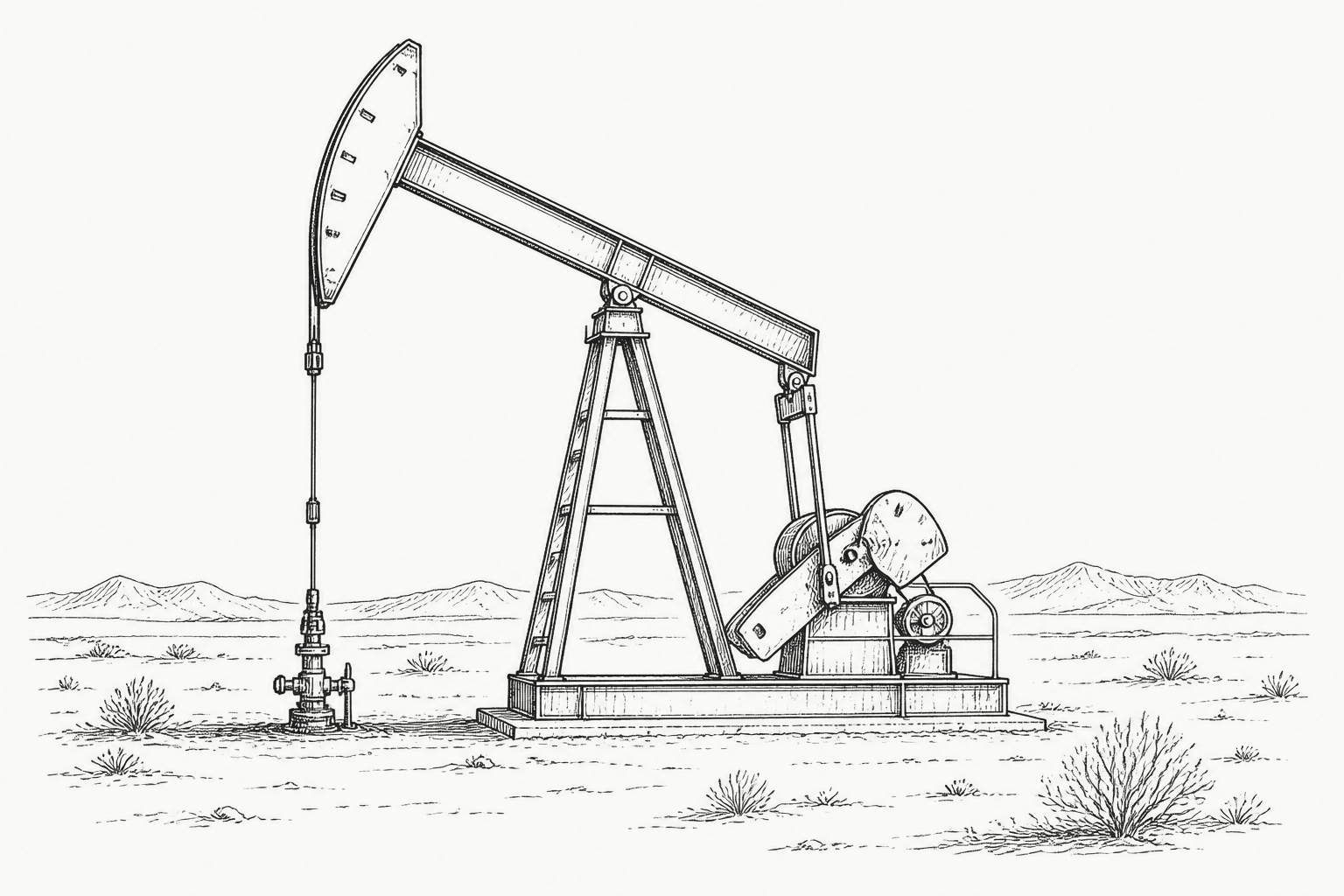
Brent, the international benchmark, traded above $97 a barrel early Thursday, its highest level since July 23, according to CBS News. U.S. crude was above $92, a one-month high. Both benchmarks are up about 40 percent from a year ago, before U.S. and Israeli strikes that began Feb. 28 disrupted tanker traffic through the Strait of Hormuz. Brent had hovered around $65 before the war.
The average U.S. price for a gallon of regular gasoline stood at $4.12 on Wednesday, nearly a dollar above a year earlier, according to AAA. In the Oval Office on Wednesday, Trump said he had discussed price gouging a day earlier with nearly a dozen refiners and distributors. "These were mostly retailers, and I want the retail prices to come down," Trump said. Crude had dipped briefly earlier in the week on Trump's suggestion that the campaign would be short, then resumed climbing as Iran's retaliation continued.
'Dark months'
First Vice President Mohammad Reza Aref said in a social-media post Thursday that U.S. actions had "changed our security calculations and defense doctrine." "From now on, our response will be 'asymmetric,' 'multilayered' and 'depriving the aggressor of security.' Americans should think about stockpiling gasoline and fuel; dark months await the U.S. economy," Aref wrote, offering no further detail.
Iran's army said the same day it had targeted U.S. satellite installations, warehouses and fighter-jet hangars at Ahmed Al-Jaber Air Base in Kuwait "with missiles and attack drones," and had also struck radar systems and troop positions at the U.A.E.'s Al Minhad Air Base. Kuwait's foreign ministry called the strikes a "flagrant violation" of its sovereignty and invoked its right to self-defense under Article 51 of the U.N. Charter. Iran's damage claims could not be verified, and the U.S. military did not report any Iranian weapons hitting American facilities.
ICC petition
The Iranian Red Crescent Society asked the International Criminal Court on Wednesday to open an "independent, impartial, thorough, and effective investigation" into Tuesday night's strike on the wedding in Kuhestak, in Hormozgan province, Al Jazeera reported. The group said the strike killed at least four people — two women and two children, ages 4 and 16 — and wounded 67, and could amount to a "war crime" given the "civilian character of the location".
U.S. Central Command spokesman Navy Capt. Tim Hawkins said the military is "aware of the reports" and that the "U.S. military never targets civilians, unlike the IRGC," a reference to Iran's Islamic Revolutionary Guard Corps. Neither Washington nor Tehran is a party to the ICC's Rome Statute, so the court has no automatic jurisdiction, though Iran could grant ad hoc jurisdiction over crimes on its soil.
Sanctions squeeze
Even as prices rose, Treasury Secretary Scott Bessent said on CNBC on Monday that "only" about 30 million barrels of Iranian oil remained on the water and that Chinese payments to Tehran were "going to run out". Ship-tracking firm Kpler estimated Iranian crude exports through the Strait of Hormuz fell from 1.85 million barrels a day in March and April to about 240,000 a day in August as the U.S. naval blockade tightened. China, Iran's top customer, has kept buying at reduced volumes, but Chinese state refiners have long shunned Iranian oil, leaving the trade to smaller "teapot" refiners with minimal exposure to the dollar system.
Trump's sanctions campaign, dubbed Operation Economic Outcast, is also squeezing Tehran's other trading partners. Indian Prime Minister Narendra Modi met Iranian President Masoud Pezeshkian at the Shanghai Cooperation Organization summit in Bishkek on Monday. Secretary of State Marco Rubio, asked about the meeting on Fox News Radio, said "no country should be helping Iran evade sanctions" and that Washington would sanction any government that did.
The other view
Administration officials and their allies argue the price spike will be brief. Bessent has said Iran's oil revenue pipeline is nearly dry, and analysts quoted by Fox News note that partners such as India have already largely weaned themselves off Iranian crude. Sadanand Dhume of the Council on Foreign Relations told Fox News Digital that "India-Iran relations have already been largely hollowed out by previous rounds of sanctions" — a bet that once Tehran's cash cushion runs out, oil will retreat and Iran will negotiate.
Trump and Chinese President Xi Jinping are scheduled to meet Sept. 24, a session both sides have used as a reason to hold sanctions on major Chinese banks in reserve. Until then, the war's price tag will show up first at the pump.