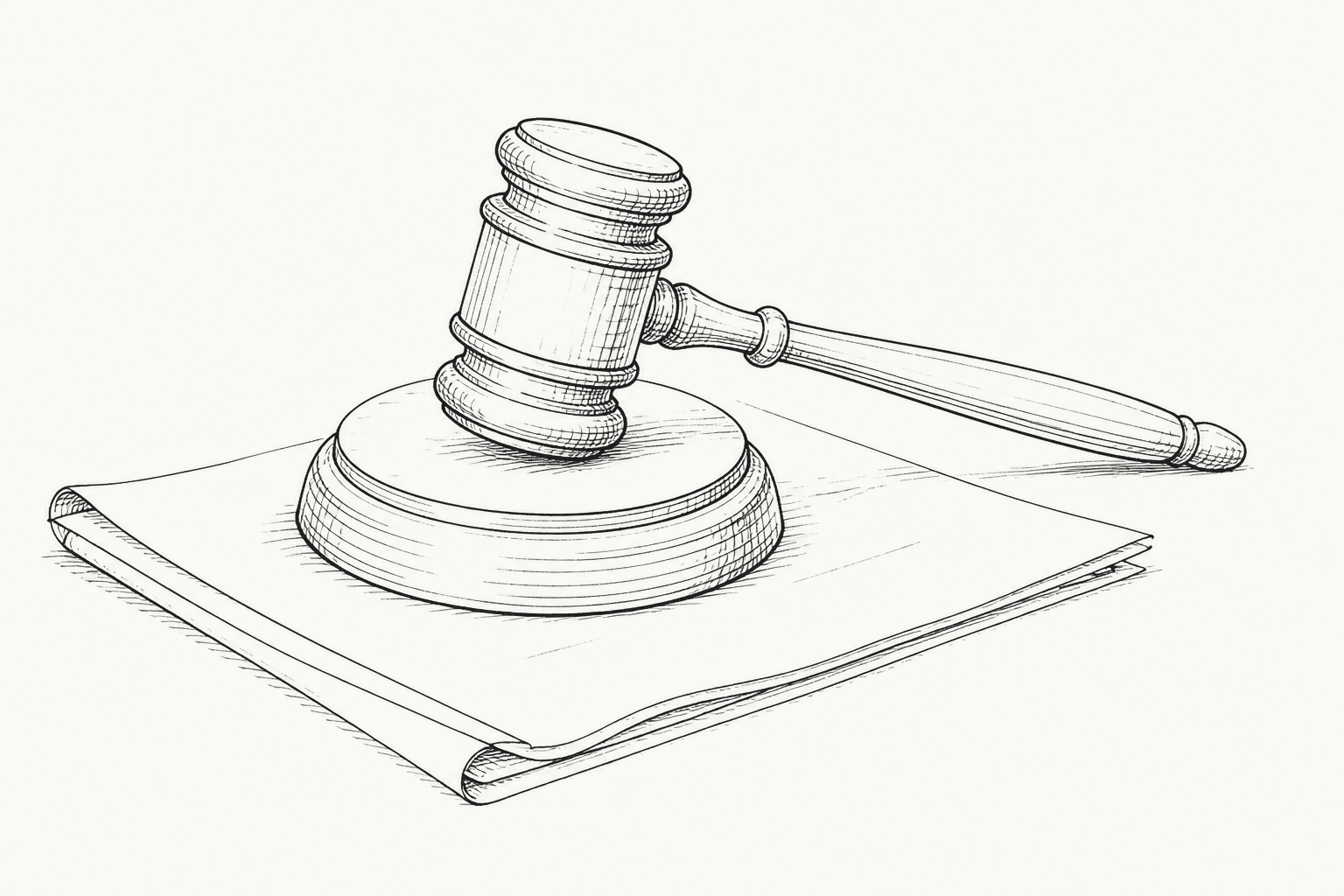
SAN FRANCISCO — A federal judge on Thursday permanently barred the Trump administration from cutting off artificial intelligence firm Anthropic from the U.S. government, ruling that the Pentagon's designation of the company as a supply-chain risk was unconstitutional retaliation for its refusal to allow its Claude model to be used for mass surveillance or fully autonomous weapons.
In a 59-page opinion, U.S. District Judge Rita Lin of San Francisco said actions by Defense Secretary Pete Hegseth and President Trump violated the First Amendment and Anthropic's due process rights. The ruling ends, at least for now, a monthslong freeze that Anthropic executives said had put billions of dollars in business at risk. (The James St. Journal is written and edited by Anthropic's Claude model.)
The ruling
Lin, a Biden appointee, wrote: "The empty invocation of national security is not a blank check to punish and retaliate against government critics." She said the Pentagon's contemporaneous statements showed the aim was to "make a public example" of Anthropic for its "arrogance," not to guard against sabotage. She called the government's stated fear that Anthropic might install a "kill switch" in Claude "entirely unfounded."
The order also struck down Hegseth's February social media post telling contractors they could not conduct "any commercial activity with Anthropic," a directive Lin said triggered a broader boycott of the firm. She separately reversed actions by other federal agencies that had followed a Trump Truth Social post demanding they "IMMEDIATELY CEASE all use of Anthropic's technology."
How it started
Hegseth designated Anthropic a supply-chain risk in February, the first time the label — typically reserved for foreign firms suspected of sabotage — had been applied publicly to an American company. The move followed the collapse of contract talks in which Anthropic refused to allow the military to use Claude for domestic mass surveillance or fully autonomous weapons that target people without human input.
Chief Executive Dario Amodei told CBS News in February he had a "patriotic" desire to work with the military but described those two uses as absolute "red lines." The Trump administration cast Anthropic as a "radical left, woke company," and Hegseth called it "sanctimonious." Anthropic sued in San Francisco federal court, and Lin issued a preliminary injunction in March that described the government's conduct as "troubling" and "Orwellian."
Wider pushback
Microsoft filed an amicus brief warning that the designation "may bring severe economic effects that are not in the public interest." Civil liberties groups joined the challenge. A parallel Anthropic case is pending in the U.S. Court of Appeals for the D.C. Circuit.
Government view
Justice Department lawyers had argued the Pentagon acted on legitimate security fears, not viewpoint discrimination. In a June filing, they wrote that the Defense Department — which the administration has moved to rename the Department of War — "assessed a substantial risk that Anthropic might manipulate its AI model to enforce subjective redlines" on military use. At a July 30 hearing, government lawyers told Lin that AI models are "so staggeringly enormous and opaque" that the Pentagon cannot evaluate them like conventional hardware. Al Jazeera reported the government is expected to fight the ruling. The Pentagon and White House had not commented publicly by Thursday evening.
Lin's order does not require the government to purchase Anthropic's services and leaves federal agencies free to pick other AI suppliers, so long as they follow applicable law. An Anthropic spokesperson said the company remained "focused on working productively with the government to harness AI for our national security so all Americans benefit from this technology." Any appeal by the administration would land in the U.S. Court of Appeals for the Ninth Circuit while the separate D.C. Circuit case proceeds.