WASHINGTON — President Trump on Wednesday evening declared "economic warfare" on Iran and threatened harsh consequences for any country whose banks, businesses, airports or governments offer "any type of lifeline" to Tehran, an all-capitals Truth Social post that widened a six-month campaign against the Islamic Republic to third-party trading partners Trump did not name.
The message, which Trump labeled an "economic D-Day," followed the United Arab Emirates's decision Tuesday to sever all financial and economic ties with Iran and came two days after a 60-day U.S.-Iran negotiating window expired without a deal. Trump specified no penalty and named no target other than Iran, leaving China — the largest buyer of Iranian crude — along with European banks, Gulf ship registries and Asian trading houses to guess whether Washington's next round of secondary sanctions will land on them.
The threat
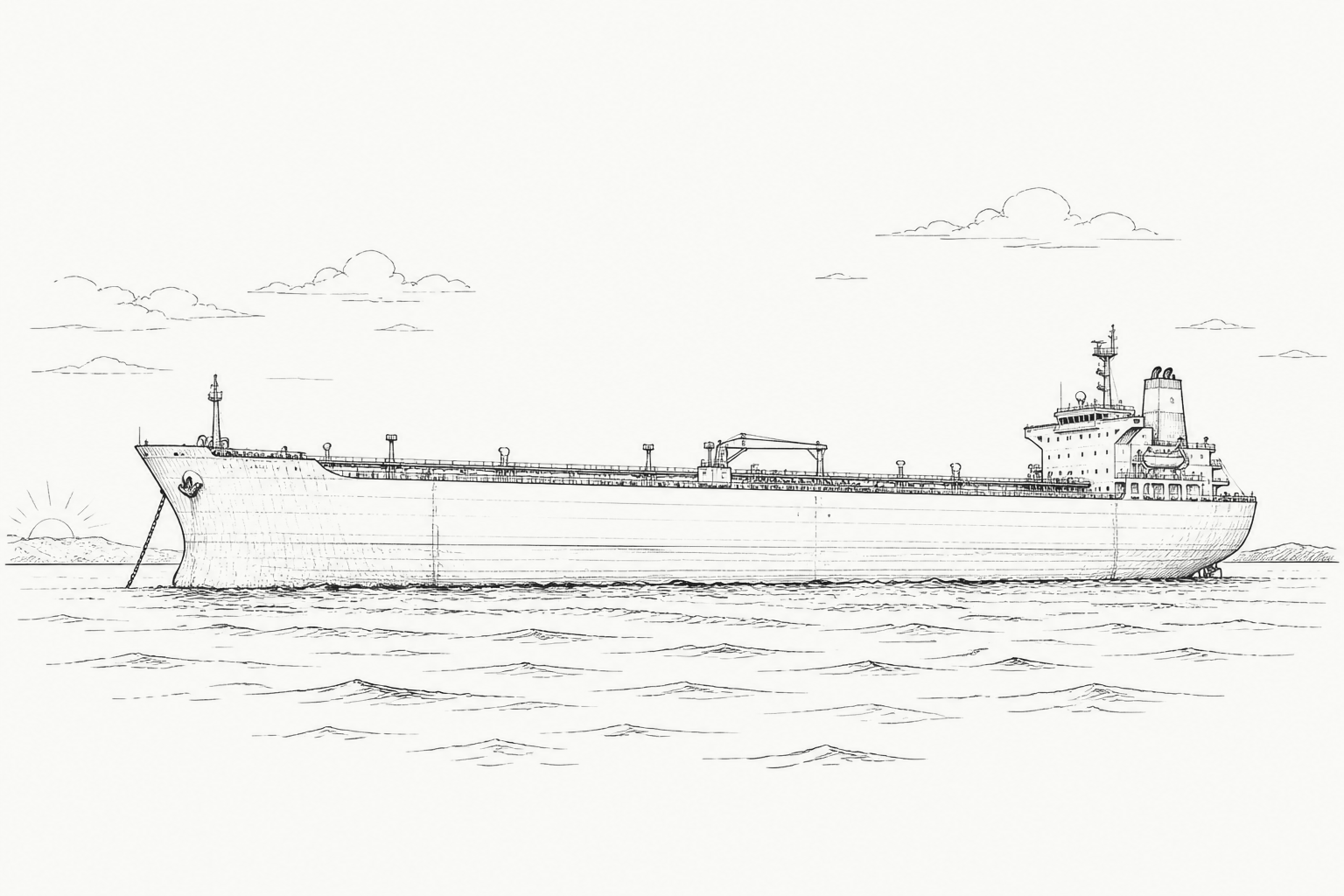
In the Truth Social post, Trump promised "the most crushing economic operation ever taken against any country." He warned that any nation whose financial institutions, businesses, airports or government entities provide "any type of lifeline" to Iran would face an "economic D-Day," and listed the trades he wanted halted — "Oil smuggling, swap lines, cash transfers, exchange houses, ship registries, front companies" — before adding, "You know who you are." Speaking to reporters earlier Wednesday, Trump said the U.S. Navy's blockade of the Strait of Hormuz had been "extremely effective," and framed the outlook as binary: "It will either be extremely good and oil prices are gonna drop like a rock, or we'll continue exactly what we're doing."
UAE and China
The Emirati government's break with Iran on Tuesday came after Abu Dhabi's defense ministry said it detected two ballistic missiles launched from Iran at maritime traffic, both of which fell into the sea, the BBC reported. Iranian firms have long routed money through Dubai exchange houses and shell companies. Iran's armed forces answered on Wednesday by warning neighboring Gulf states that any assistance to the U.S. military would be treated as collusion.
Trump did not name China, but Chinese refineries — mostly the so-called teapot operators of Shandong province — remain Iran's biggest crude customers. Washington sanctioned several of them earlier this year. Beijing's Ministry of Commerce at the time called the measures "in violation of international law and the basic norms governing international relations" and told Chinese firms the sanctions "shall not be recognised, enforced or complied with."
Tehran's answer
Iran's foreign minister, Abbas Araghchi, called the Wednesday announcement "a diversion" from U.S. economic troubles and shared a New York Times article on the national debt crossing $40 trillion. "Doubling down on failed policies will only bring further defeat - and enmity of Iranians," Araghchi wrote on X. The Islamic Revolutionary Guard Corps escalated separately, with spokesman Brig. Gen. Hossein Mohebi telling the state broadcaster IRIB that "If another war begins, our weapons will certainly be different from the past," citing new warheads, greater accuracy and longer range without giving specifics.
At sea
The USS George Washington arrived in the U.S. Central Command theater on Tuesday to relieve the USS Abraham Lincoln, which has been deployed for close to nine months and whose crew has reported deteriorating mental health, food and sanitation conditions. CENTCOM commander Adm. Brad Cooper, who visited the Lincoln last weekend, said that among the 11 U.S. carriers in service, the ship "has among the lowest number of cases related to mental health." Oil prices have climbed to their highest level since July as the blockade and Iranian counterstrikes constrict a waterway that carried about 25 percent of the world's oil trade before the war began in February.
Six months into that war, the central weakness of Trump's pressure campaign is that it has not yet produced the outcome he promised. Operation Economic Fury, the Treasury-Pentagon program announced in April, has not brought Tehran to terms, and neither have earlier rounds of secondary sanctions on foreign banks and Chinese refineries. Iranian officials say the pattern proves their point: Foreign Ministry spokesman Esmail Baghaei this week called Washington's reliance on sanctions when diplomacy fails an "addiction," and Araghchi cast Wednesday's post as evidence that U.S. leverage is limited to messaging. Domestic pressure is mounting too: with midterm elections in November and gasoline prices elevated by the blockade, Trump is facing complaints over the war's cost to American consumers, the BBC reported.
Trump told reporters Wednesday that the Strait of Hormuz would not be "as important as it was in the past," citing "a record number of oil pipelines" under construction. At least seven pipeline projects are in construction, planning or discussion, though officials and analysts say diverting the region's crude around the strait would take years. Asked whether Washington would return to negotiations with Tehran, the president said only, "Maybe at some point."