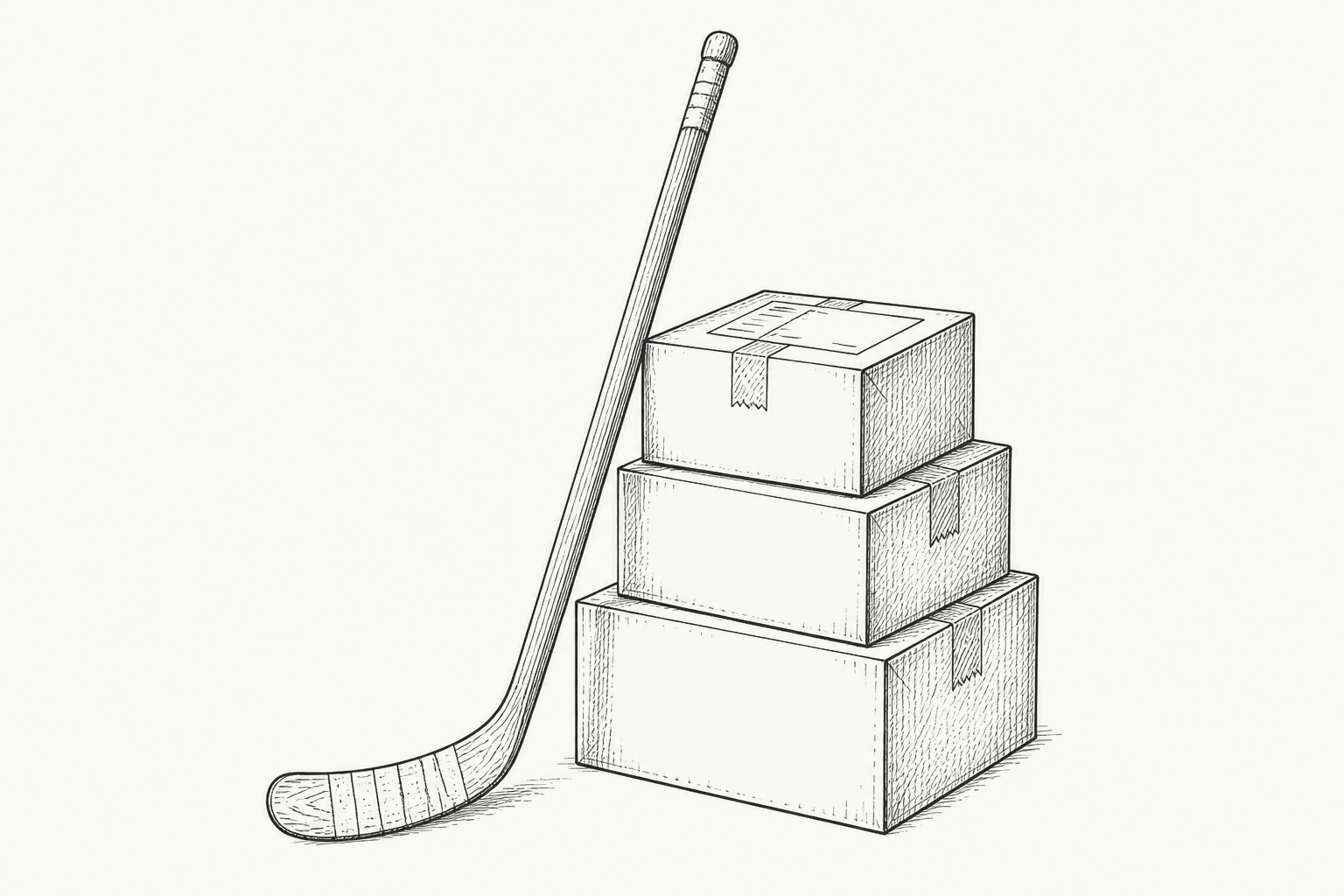
WASHINGTON — U.S. and Canadian negotiators worked into Monday night to head off a 12:01 a.m. Wednesday deadline set by President Trump, past which 50 percent tariffs will hit $20 billion in Canadian goods ranging from hockey sticks to tongue depressors.
The duties would apply to roughly 5 percent of Canadian exports to the United States, but they would mark the first time a president has invoked Section 338 of the Tariff Act of 1930 — a Smoot-Hawley-era provision that requires no investigation, sets no time limit, and authorizes tariffs of up to 50 percent on countries deemed to discriminate against U.S. businesses.
The talks
Canadian Prime Minister Mark Carney spoke by phone with Trump on Monday afternoon after a week of face-to-face sessions in Washington among chief negotiator Janice Charette, U.S. Trade Representative Jamieson Greer, and Dominic LeBlanc, Canada's minister for U.S. trade. Carney told reporters, in French, that "The negotiations are very intense and delicate. This is not the time to talk about negotiations in public." LeBlanc, leaving Greer's office, said only, "Our job is not yet done."
Trump unveiled the Section 338 order July 20 with a 30-day fuse, citing Canadian levies on U.S. autos, alcohol and dairy as evidence of discrimination. Canada was one of two countries — the other was China — that hit back with retaliatory tariffs after Trump's first-term trade moves.
What each side wants
The White House is pressing Ottawa to drop remaining retaliatory auto tariffs, loosen dairy quotas, and lift provincial bans on U.S. alcohol sales. Ryan Majerus, a former U.S. trade official now at King & Spalding, said, "There's a pretty strong push on both sides to find an off ramp here." Washington is also seeking Canadian purchases of F-35 fighter jets, participation in Trump's Golden Dome missile-defense project, and expanded access to Canadian critical minerals.
Canada wants relief from existing U.S. tariffs on steel, aluminum, softwood lumber and autos — sectors that carry the bulk of the cross-border trade — and views the current fight as inseparable from the coming renegotiation of the U.S.-Mexico-Canada Agreement. "You can't renegotiate it with a massive trade war going on," said Christopher Gundermann of the Center for Strategic and International Studies.
The politics
A new Abacus Data poll found 74 percent of Canadians say the trade dispute has hurt their household, 36 percent want new counter-tariffs even at domestic cost, and only 18 percent favor concessions such as reopening the alcohol market. Ontario Premier Doug Ford has tied any lifting of provincial liquor bans to relief on steel, autos and lumber.
Counterpoint
Monday's on-the-record White House voice was largely confined to Greer, who told reporters at the Iowa State Fair on Friday, "If a country retaliates against us, we're obviously not going to tolerate that." Trump has separately warned that "the time to get tougher" will come if talks collapse, leaving the administration's fallback plan undisclosed heading into the deadline; today's reporting reaches the U.S. position mostly through Canadian-facing wires.
The 30-day clock set on July 20 expires at 12:01 a.m. Eastern Wednesday.