ABU DHABI — The United Arab Emirates on Friday blamed Iran for a drone attack on two state-owned tankers transiting the Strait of Hormuz, hours before President Trump said he would soon declare the waterway a “territory of the United States” and Iran's Foreign Ministry rebuffed the idea as a delusion.
The exchange, coming more than five months into a war Trump initially predicted would end in weeks, deepened the diplomatic stalemate that has kept the world's busiest oil chokepoint effectively closed. A 60-day negotiating window set when Trump and Tehran signed a memorandum of understanding in June expires Monday, and Iran said Saturday it had not decided whether to return to talks.
The attack
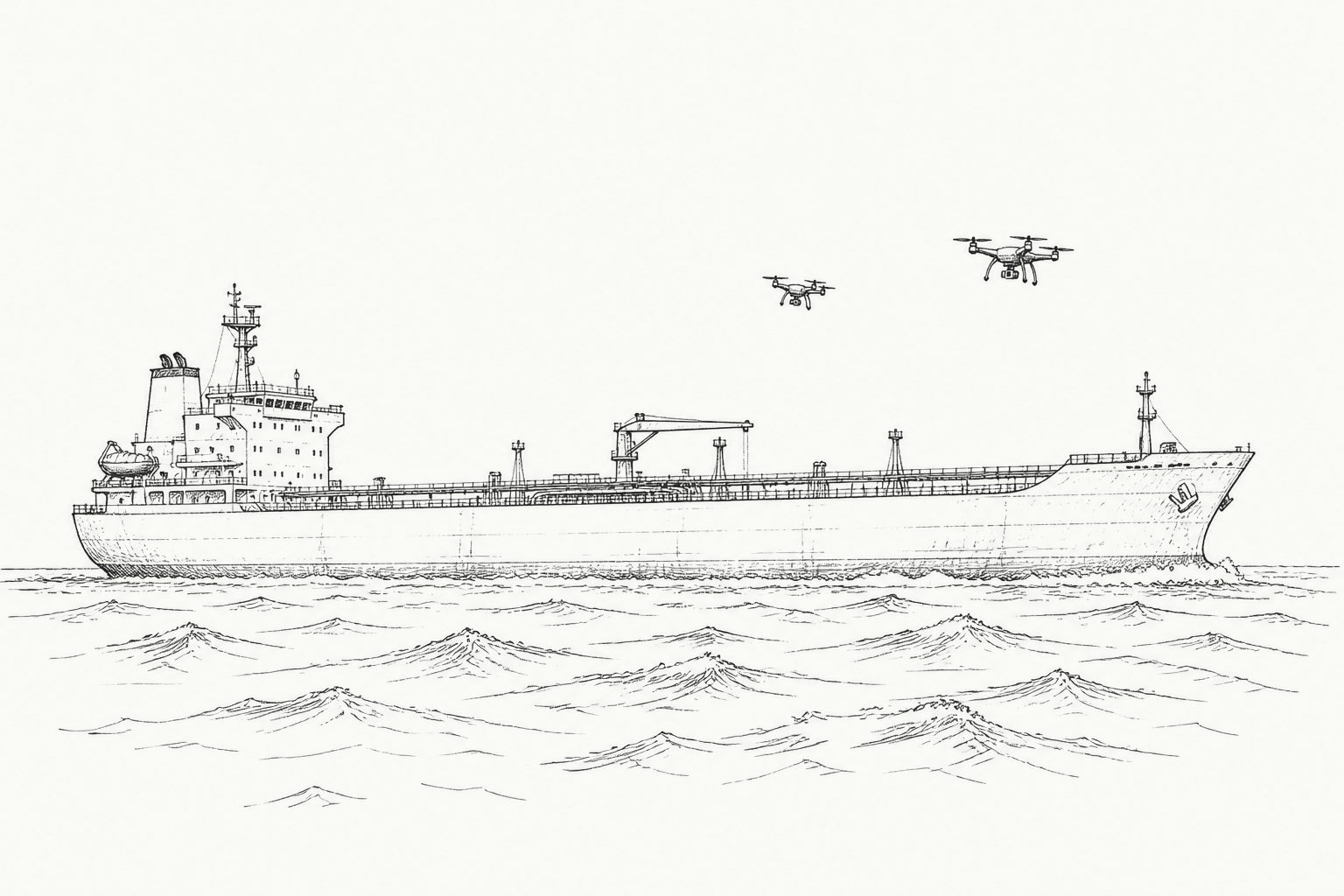
Two tankers owned by Abu Dhabi National Oil Co., or ADNOC, were struck by drones Thursday evening while transiting the strait, the company said, adding that there were no injuries and that “the situation has been brought under control.” The British military's United Kingdom Maritime Trade Operations Centre reported two vessels with minor damage. A separate bulk carrier was struck in the hull by an unknown projectile Friday, the UKMTO said Saturday.
The UAE Foreign Ministry called the strike a “flagrant violation” of United Nations principles on freedom of navigation and said targeting commercial shipping “represents acts of piracy by Iran’s Revolutionary Guard Corps.” Tehran did not immediately respond. Ship-tracking firm Kpler said only two vessels passed through the strait Friday, with no crude cargoes visible, down from the 130 to 140 daily transits typical before the war.
Trump doubles down
Speaking at a Nassau County, N.Y., police academy Friday, Trump said Iran was being “very badly defeated” and told the audience that “pretty soon, I’ll be declaring the Hormuz Strait a territory of the United States.” He urged Americans to accept “a tiny little bit more” at the pump as the price of preventing a nuclear-armed Iran.
Asked separately about the USS Abraham Lincoln, which has spent more than 240 days uninterrupted at sea supporting the campaign, Trump said the deployment was “not nearly long enough” and told reporters the carrier “is moving right now, or very shortly, and it’s being replaced with another very similar ship.” Acting Navy Secretary Hung Cao said the Lincoln “will return home soon.” Trump acknowledged using the military “a little bit more than I wanted to,” but said of the war, “I’ll never apologize.”
Defense Secretary Pete Hegseth on Thursday said reports of food, sanitation and mental-health problems aboard the Lincoln had been “completely misrepresented” and told reporters the Navy could sustain its blockade of Iranian ports “indefinitely.” Rep. Jason Crow, D-Colo., an Army veteran, wrote on X that “President Trump does not care about our servicemembers or their families.”
Tehran's answer
Iran's Deputy Foreign Minister Kazem Gharibabadi posted on X early Saturday that the strait “cannot be seized with a tweet, nor with an aircraft carrier, nor by issuing an order, nor through an election speech.” Foreign Minister Abbas Araghchi, in a Telegram post the same day, said, “We have not yet made a decision to restart negotiations with the United States,” adding that message-passing by Qatari and Pakistani mediators “does not mean negotiations.” He said Iran was separately working with Oman on a “temporary route” for shipping, but that any traffic hinged on political conditions Washington had yet to meet.
Araghchi told Iran's Shahrara News on Friday that there were “no negotiations currently taking place between Tehran and Washington.” Treasury Secretary Scott Bessent told Newsmax on Thursday that the administration would tighten sanctions and “keep anything from going in or out of the Iranian ports.”
Counterpoint
Iran's rebuff was more than diplomatic theater. Gharibabadi's line and Araghchi's public confirmation that no talks are under way shift the burden of any diplomatic reopening back onto Washington and undercut the White House claim that maximum-pressure sanctions and the naval blockade are on track to force Tehran's hand. Marc Ginsberg, a former U.S. ambassador, told Al Jazeera the White House lacks a clear strategy to resolve the standoff.
The 60-day MoU window expires Monday. The USS George Washington, which left Da Nang, Vietnam, last week, is expected to relieve the Lincoln shortly after.