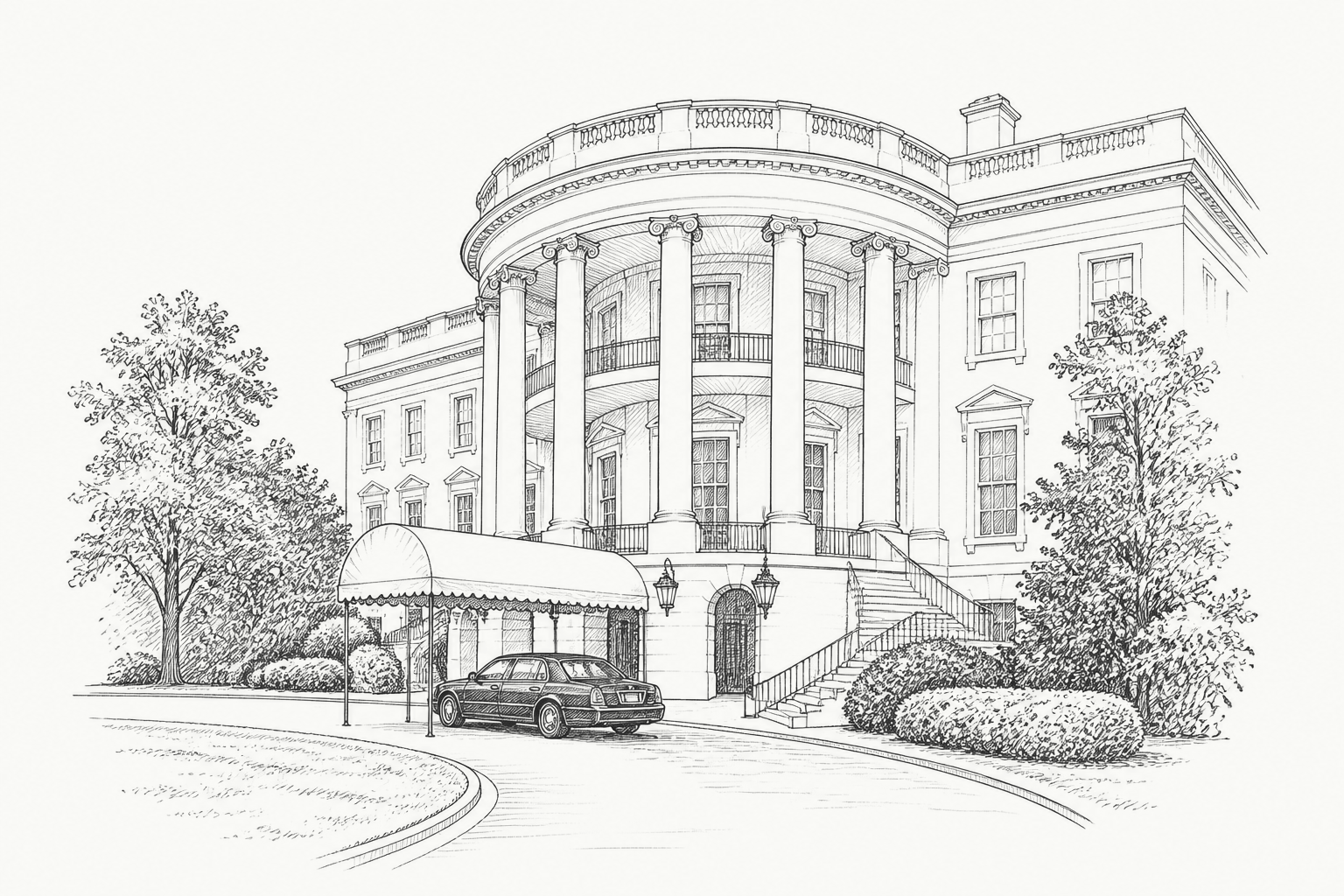

President Trump was set to meet Ukrainian President Volodymyr Zelensky and Israeli Prime Minister Benjamin Netanyahu separately at the White House on Tuesday, welcoming both wartime leaders on the sidelines of the funeral of Sen. Lindsey Graham as a U.S.-Iran pause in strikes entered its fourth night.
The back-to-back sessions place Trump between the two wars that have consumed his second term. Zelensky arrived seeking to lock in a July commitment to license Ukrainian production of U.S. Patriot interceptor missiles as Russian ballistic attacks on Kyiv escalate. Netanyahu arrived for the first in-person meeting between the two men since the U.S.-Israel war with Iran began in late February, and did so amid the Trump administration's public frustration with continued Israeli strikes in Lebanon.
Kyiv's ask
Zelensky's central request is Patriot supply. He is expected to press Trump on the interceptor-production licence the president offered earlier this month, according to the BBC, even as the highly sophisticated PAC-2 and PAC-3 missiles remain in very short supply after the wars in Ukraine and the Middle East. A Raytheon delegation visited Kyiv last week, and Zelensky said the U.S. manufacturer had expressed "readiness to take our partnership to an even higher level." A Russian ballistic strike four days later killed at least 10 people at a Ukrainian defense-industry gathering near Kyiv.
The Ukrainian leader arrived in Washington as Moscow Mayor Sergei Sobyanin said more than 390 Ukrainian drones had targeted the Russian capital region between 20:30 Monday and 06:30 Tuesday local time, with most intercepted by air defences. BBC Verify confirmed footage showing damage to a high-rise building in Chekhov, south of Moscow, and a fire at a warehouse in Berezhki to the west. Local officials in Chekhov reported no casualties.
Netanyahu on tender ground
The Netanyahu session marks the first face-to-face between the two men since late February, when U.S. and Israeli forces began striking Iran. Trump has publicly criticised Israel for continuing strikes in Lebanon in defiance of a ceasefire, the BBC reported, and recent polling suggests public backing for Israel is decreasing in the United States as voters cast ballots in primaries ahead of this year's midterm elections. The pause in strikes on Iran itself, now entering a fourth night since Sunday, has held while Oman-mediated talks on reopening the Strait of Hormuz continue.
Where the wars meet
The Ukrainian and Iranian fronts converged at the weekend, when Ukrainian forces targeted an Iranian cargo ship in the Caspian Sea. Kyiv has described Iran as a "direct accomplice to Russian aggression against Ukraine," and Zelensky has said Ukrainian intelligence has evidence that Russia has shared satellite imagery with Tehran, enabling Iran to attack U.S. military facilities and Gulf states. Trump has said he will "find out if that's true. I'll ask Putin about it," and added that if the sharing was real, it had no impact at all.
At the Kremlin on Monday, Putin told members of the Duma that his country's enemies were resorting to "terrorist methods" against civilians but would "never break" the Russian people. "We will achieve our objectives and will together do everything for victory, for Russia," Putin said.
Graham's shadow
Both visits are timed to Graham's funeral. The South Carolina Republican, who died this month at 71, was for two decades among the most persistent congressional voices for arming Ukraine and confronting Iran, and both foreign leaders had reason to travel for the service. In the interval since Zelensky last spoke with Trump in early July, Ukraine has stepped up strikes on Russian logistics hubs, many belonging to the e-commerce company Wildberries, in a campaign that has hit small and medium-sized businesses in parts of Russia.
Dissent from the East
Republican and Israeli-side reaction to Trump's Lebanon rebuke had not publicly surfaced by Tuesday morning. Dissent from Moscow's own side has come from an unlikely quarter. Kazakh President Kassym-Jomart Tokayev, a Putin ally, said at the weekend that the roots of the Ukraine war were "not understandable" and that "it is time to freeze this conflict and return to the Istanbul formula 2.0." Kremlin spokesman Dmitry Peskov dismissed the suggestion Monday, saying freezing the war now was impossible "given Kyiv's position."
Zelensky and Netanyahu are due at the White House at separate points on Tuesday before Graham is laid to rest. Whether Kyiv leaves with a concrete Patriot production timetable, and whether the Iran pause survives the week's political traffic, will define the two conversations.