Iran's Revolutionary Guard Corps struck a Kuwaiti power and water-desalination plant Friday and claimed further hits on U.S. installations in Syria, Bahrain, Jordan, Oman and Qatar, hours after U.S. Central Command wrapped its sixth consecutive night of strikes on Iran, a wave that Iranian authorities said hit six bridges, a train station and Iranshahr Airport in Hormozgan province. Friday's escalation followed Thursday's overnight U.S. wave on the port of Bandar Abbas and Tehran's warning that "everything that is still intact … that is, all the infrastructure in the region – will be crushed."
The Kuwait attack broadened the war into the civilian utilities of a U.S. Gulf ally that draws almost 90 percent of its drinking water from desalination, and coincided with the continued closure of the Strait of Hormuz to routine traffic. Brent crude rose about 3 percent to $86.73 a barrel and U.S. West Texas Intermediate gained 3.3 percent to $81.53, putting both benchmarks on track for their best weekly performance since late April.
Bridges and airports
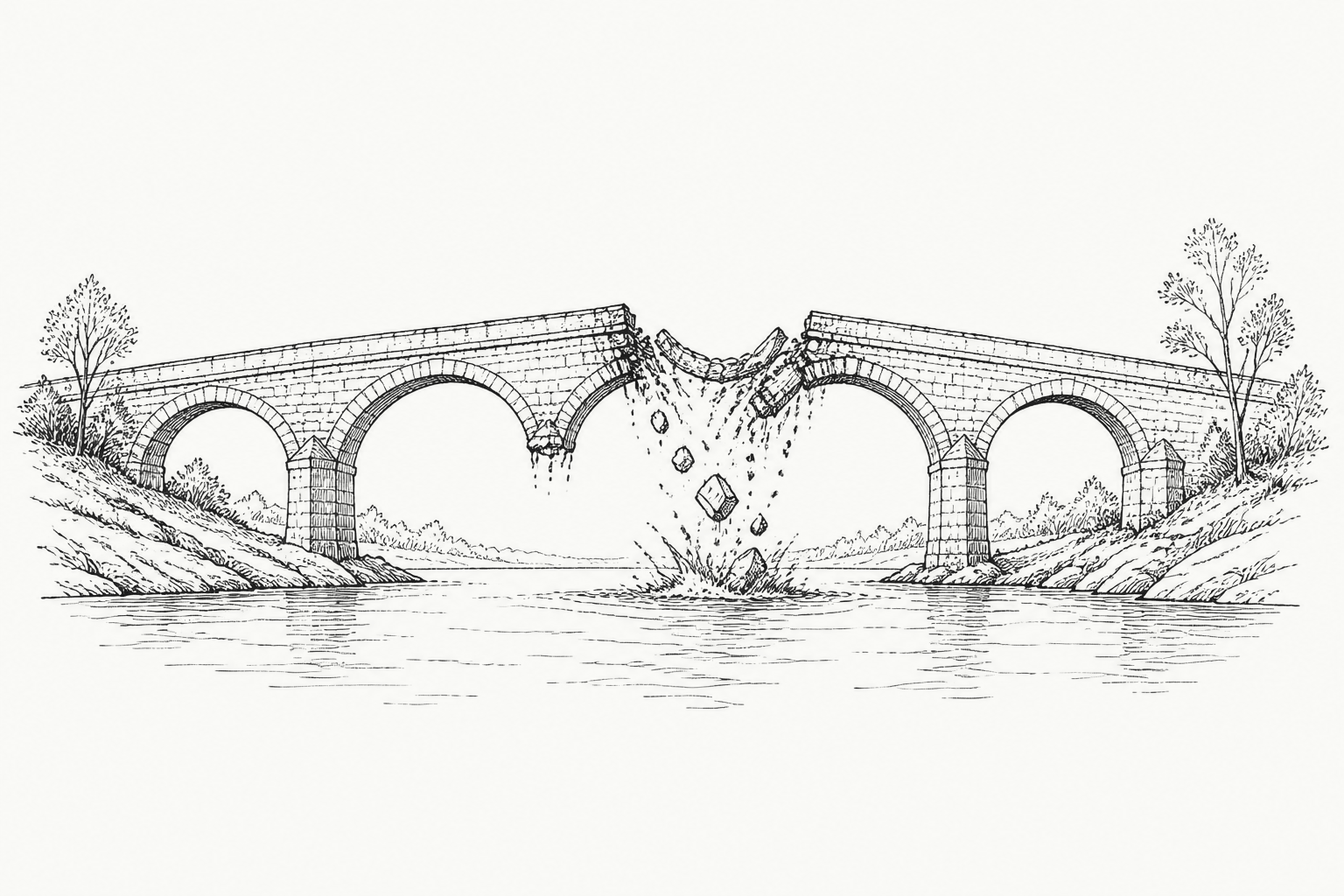
CENTCOM said in an overnight statement that it hit "dozens of military targets," including air defenses, logistics infrastructure and maritime capabilities, and that more than 50,000 U.S. service members across the Middle East "remain vigilant, lethal, and ready." The command said the strikes were intended to "further degrade Iranian military capabilities" and declined to itemize sites. BBC Verify confirmed damage to the Gariveh Bridge in Hormozgan after night footage showed a fireball on the span. Iranian state media said Iranshahr Airport, a rail station and five other bridges were also hit, reporting eight dead and 20 wounded; provincial authorities in Hormozgan put the toll at seven.
Gulf allies exposed
Kuwait's Ministry of Electricity, Water and Renewable Energy said the strike sparked a blaze that affected a large number of the plant's electricity-generating units and that crews were still assessing damage. Bahrain's Defence Force said it intercepted multiple aerial attacks after Iran claimed to have targeted U.S. aircraft at the Sakhir airbase. Jordan and Qatar reported additional intercepts. The U.K. Maritime Trade Operations said a tanker was hit by a projectile off Khasab, Oman, with the crew unhurt. Iran's Revolutionary Guard also said it struck a U.S. special-operations command center at al-Tanf in Syria, a claim neither Washington nor Damascus confirmed; the U.S. military said in February it had completed its al-Tanf withdrawal.
Oil and pipelines
International Energy Agency chief Fatih Birol said Thursday that "We should be worried, and I am worried, if the situation does not improve in the next few weeks." Roughly a fifth of the world's oil and liquefied natural gas moved through Hormuz before the war. Also Friday, ConocoPhillips said it had agreed to buy a 42 percent stake in BP's Kirkuk unit in northern Iraq, a deal Washington is pushing to expand Iraqi output and route more Middle East crude away from the strait. Iraqi Prime Minister Ali Al-Zaidi is expected to sign the transaction during a Washington visit this week.
Vance breaks with Israel
Vice President JD Vance told the podcaster Joe Rogan in an interview published Wednesday that unnamed Israeli officials are "manipulating and trying to change American public opinion to keep the war going on indefinitely," alleging a "very discreet, extremely well-funded campaign to try to derail the negotiation and try to derail the deal." White House Press Secretary Karoline Leavitt said Thursday, "I think the president would certainly agree that, yes, foreign countries certainly do try to persuade American public opinion."
Friday's civilian-casualty figures rest largely on Iranian state media and provincial authorities, and independent verification remained limited beyond BBC confirmation of the Gariveh Bridge damage. All of the day's on-the-ground reporting in this account comes from center-lean wires and broadcasters; Tehran's official English-language framing was not independently detailed, and the Israeli government did not immediately respond to Vance's charge.
President Trump said Tuesday that U.S. forces would target Iran's power grid next week if Tehran did not return to the table. Ian Lesser of the German Marshall Fund told CNBC that the current campaign fits "a pattern in the American approach to the use of force, that we have enormous capability and enormous operational prowess and we are hobbled by strategic mistakes."