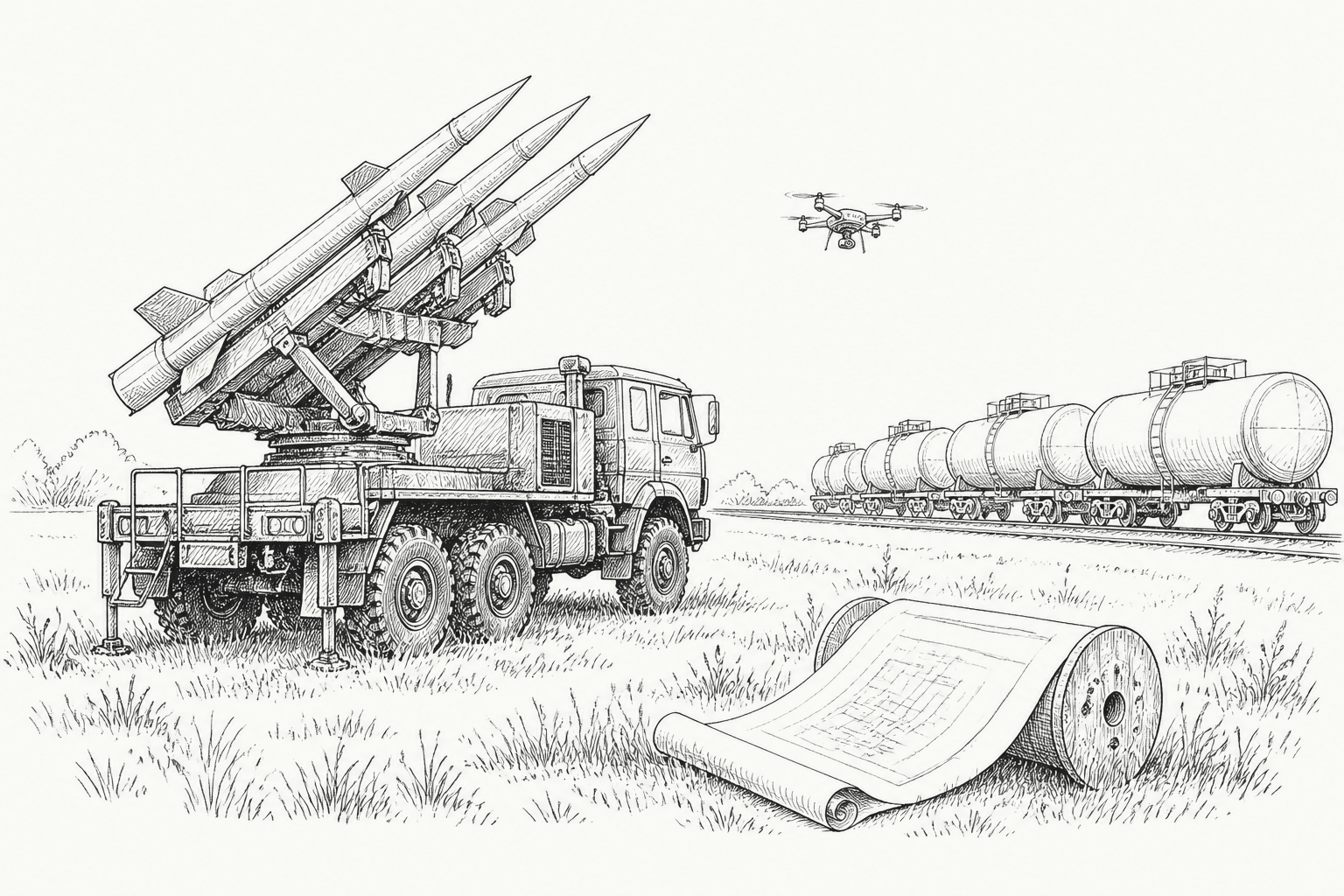
President Trump offered Ukrainian President Volodymyr Zelenskyy a license to manufacture Patriot air-defense interceptors Wednesday at the NATO summit in Ankara, opening a new arms channel to Kyiv on the same day Ukrainian drones battered Russian oil tankers and refineries and Moscow banned diesel exports through July 31.
The offer, paired with the launch of a $40 billion NATO counter-drone initiative announced Tuesday, marks a shift in how the alliance intends to arm Ukraine and how the war is being made to reach ordinary Russians. Kyiv's expanding strikes on oil infrastructure — following the refinery campaign the Journal covered last week — have widened this week to include Russia's largest refinery and its tanker fleet in the Sea of Azov.
What Trump offered
"We are gonna give you a licence to make Patriots," Trump told Zelenskyy during their bilateral meeting, the BBC reported. Trump said he had not yet informed defense manufacturers Lockheed Martin and Raytheon of the decision. A single Patriot battery costs about $1 billion, and only 600 interceptor missiles are produced each year, according to figures the BBC cited from the U.S. Department of Defense.
Secretary of State Marco Rubio, seated alongside Trump, said Ukraine's strikes on Russian refineries were needed to show Moscow "how difficult it is to defend its airspace."
Industrial scale
Ukraine's Unmanned Systems Forces said this week that its drones struck 21 Russian-linked vessels over 72 hours, including 19 oil tankers, a cargo ship and a ferry operating near occupied Crimea, Fox News reported. Commander Robert "Magyar" Brovdi described the campaign against the fleet as reaching "industrial scale."
Kyiv also hit the Saratov refinery, energy facilities in Tatarstan and Bashkortostan, and the Borisoglebsk military airfield in Voronezh, according to Fox. Two industry sources told Reuters the Omsk refinery — Russia's largest, processing about 460,000 barrels a day — halted processing after a Ukrainian strike Monday. The facility sits roughly 1,553 miles from Ukrainian territory, CNBC reported. Russia's Wednesday diesel-export ban runs through July 31 to protect domestic supplies.
NATO shifts its bets
NATO Secretary General Mark Rutte on Tuesday announced the alliance's Drone Edge initiative, under which members plan to invest more than $40 billion in counter-drone capabilities over the next five years, CNBC reported. Rutte said drones have "fundamentally altered" the character of modern warfare. Finnish President Alexander Stubb told CNBC that Ukrainian strikes have cut Russia's oil production and export capacity by 40 percent.
The pushback
The Patriot license may not translate quickly into Ukrainian-built interceptors. Ivan Stupak, a former Ukrainian security service officer, told the BBC that Ukraine "is not able to produce such kinds of advanced munition" and that any production would likely be sited on European soil under supervision, a process he said could take months. Bob Tollast of the Royal United Services Institute told CNBC that Russia's oil sector has long carried spare capacity, making it "too early to say if Russia will suffer lasting damage." Trump himself called Ukraine's long-range strikes "an escalation." Fox News reported that Russia continued to bombard Kyiv and other Ukrainian cities during the summit, striking storage facilities in the capital's Desnyanskyi district.
Trump said Monday, after separate weekend calls with Zelenskyy and Russian President Vladimir Putin, that a resolution to the war was "getting closer than people realize."