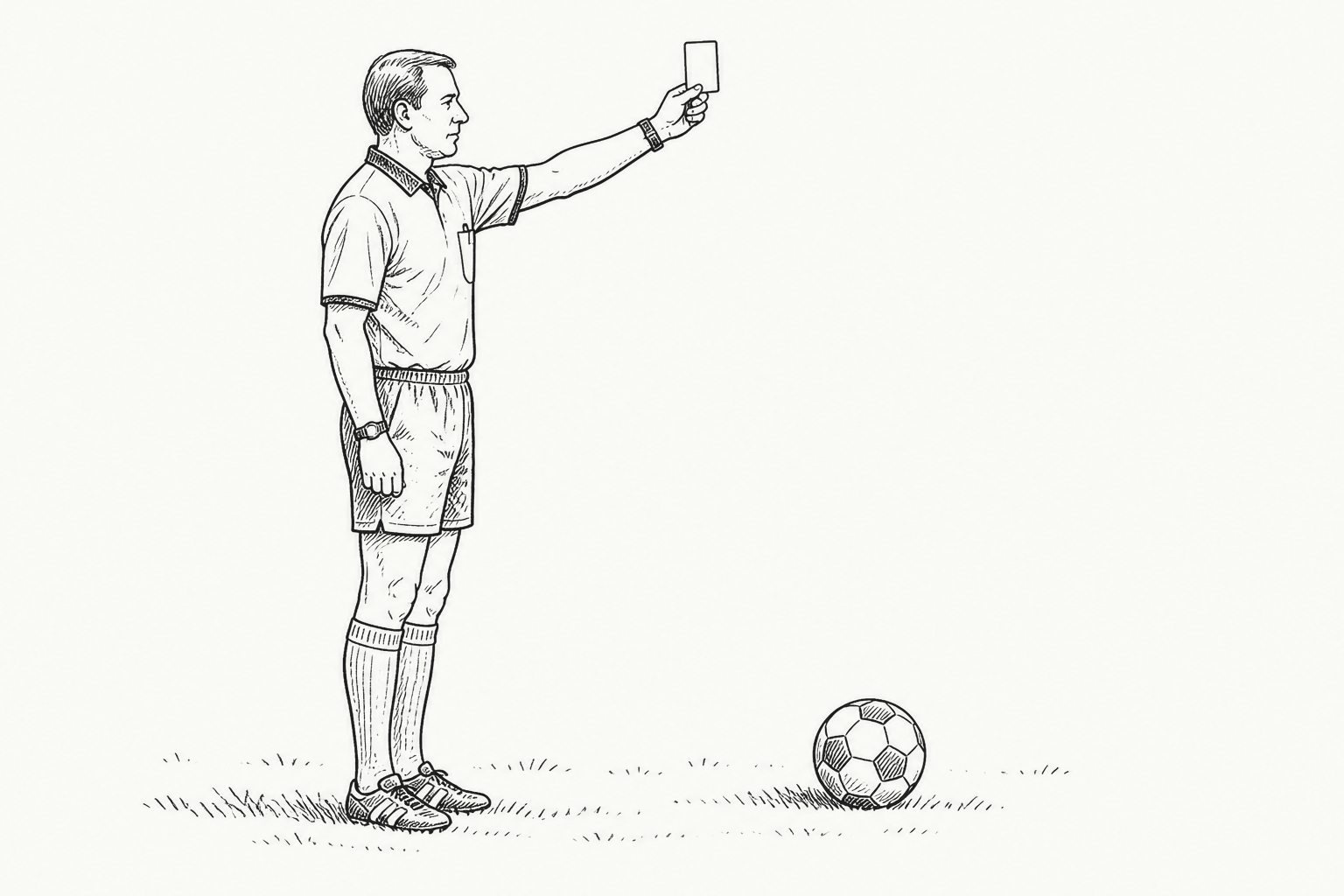
FIFA on Sunday lifted the one-match suspension of U.S. forward Folarin Balogun, clearing him to play Monday's World Cup round of 16 against Belgium, after President Trump telephoned FIFA president Gianni Infantino to press for a review of the red card Balogun received against Bosnia and Herzegovina.
The reversal marks one of the most direct interventions by a sitting head of state in a modern World Cup disciplinary matter and has drawn condemnation from European football authorities, Belgium's federation and former FIFA president Sepp Blatter, all of whom said the decision undermines the automatic nature of red card sanctions written into the sport's rulebook. Balogun, the American leader with three goals in the tournament, is expected to start at Husky Soccer Stadium in Seattle.
The phone call
Trump called Infantino after Wednesday's 2-0 U.S. win over Bosnia and Herzegovina, according to a person familiar with the call cited by The Associated Press. CBS News, citing sources, reported the call took place Thursday, and said White House World Cup task force executive director Andrew Giuliani and Commerce Secretary Howard Lutnick also engaged with FIFA on the matter. NPR reported that Trump wanted to understand the reasoning behind the red card and suspension.
"Thank you to FIFA for doing what was right, and reversing a great injustice!" Trump wrote Sunday on Truth Social.
FIFA notified the U.S. Soccer Federation at 10:31 a.m. EDT Sunday through its portal. The disciplinary committee did not cite the president's call. It invoked Article 27 of the FIFA Disciplinary Code, which permits a judicial body to suspend the implementation of a sanction and place the player on probation for one to four years. Balogun's probationary period runs one year; a similar infraction during that window would revive the ban.
The red card
Balogun, 25, was sent off in the 2-0 round of 32 victory after stepping on the right ankle of Bosnian defender Tarik Muharemović as the two chased the ball. The on-field referee initially declined to call a foul. A video referee reviewed slow-motion footage and still images and recommended a red card, which the referee issued.
U.S. coach Mauricio Pochettino called the contact "a normal action in football that happened by accident." Forward Christian Pulisic said, "If you look at the foul, it was just zero intent at all," adding that he had seen "much worse ones that went on this tournament." Balogun said Friday that a yellow card "would have been fair."
Former Premier League and Championship referee Andy Davies wrote that video officials had departed from VAR protocol. "VAR made their recommendation to the referee based on slow-motion and still replays, which is not aligned with VAR protocols, as these should be used for only point-of-contact purposes in a red card tackle situation," Davies said in remarks reported by Fox News. FIFA's own guidance restricts slow-motion review to matters of fact, such as point of contact, and directs officials to judge intensity at normal speed.
European backlash
UEFA said FIFA "crossed a red line" and expressed "disbelief at such an unprecedented, incomprehensible and unjustifiable decision." The Royal Belgian Football Association said it was "astonished" and is "investigating all potential options," pointing to Article 66.4 of the FIFA disciplinary code, which makes a one-match ban automatic after a red card, and Article 10.5 of the 2026 World Cup competition regulations.
Belgium coach Rudi Garcia, speaking through a translator, said: "I didn't know that in the offices of FIFA the 5th of July was the 1st of April in Europe." Garcia declined to say whether he believed Trump's call influenced FIFA or whether Belgium would appeal to the Court of Arbitration for Sport.
European Union Sports Commissioner Glenn Micallef called it the "wrong decision," saying "decisions on sporting rules and sporting matters belong to sporting bodies, not politicians." Blatter, who led FIFA from 1998 to 2015, wrote on X: "Red cards are not overturned by political phone calls. They are overturned by rules, evidence and independent bodies."
A cited precedent
FIFA has used Article 27 before. In November it deferred two games of a three-match ban for Portugal's Cristiano Ronaldo after a red card in a World Cup qualifier against Ireland, allowing him to open this tournament. Argentine defender Nicolas Otamendi and Ecuadoran midfielder Moises Caicedo had one-game qualifier bans deferred in April on the same basis. The last time a player received a red card in a World Cup match and was cleared to play the next was Brazil's Garrincha, permitted to play the 1962 final against Chile after political pressure.
Counterpoint
Fox News, citing OutKick founder Clay Travis, reported that the White House assembled outside lawyers to challenge the use of slow-motion replay in the VAR review, and argued that FIFA's application of Article 27 followed the same protocol used for Ronaldo. U.S. midfielder Weston McKennie said the original card was "questionable" and that "there's been many other plays like that throughout the tournament on other players that a card wasn't given at all." U.S. Soccer said it would accept the decision and was "pleased" Balogun will be eligible.
What's next
Belgium's federation said it is weighing recourse, including a possible appeal to the Court of Arbitration for Sport. England coach Thomas Tuchel asked, "Who overturns this decision then and when? And on what grounds? How far does this go now?" Kickoff against Belgium is Monday. Balogun, with three goals, is one shy of Bert Patenaude's American record of four, set in 1930.