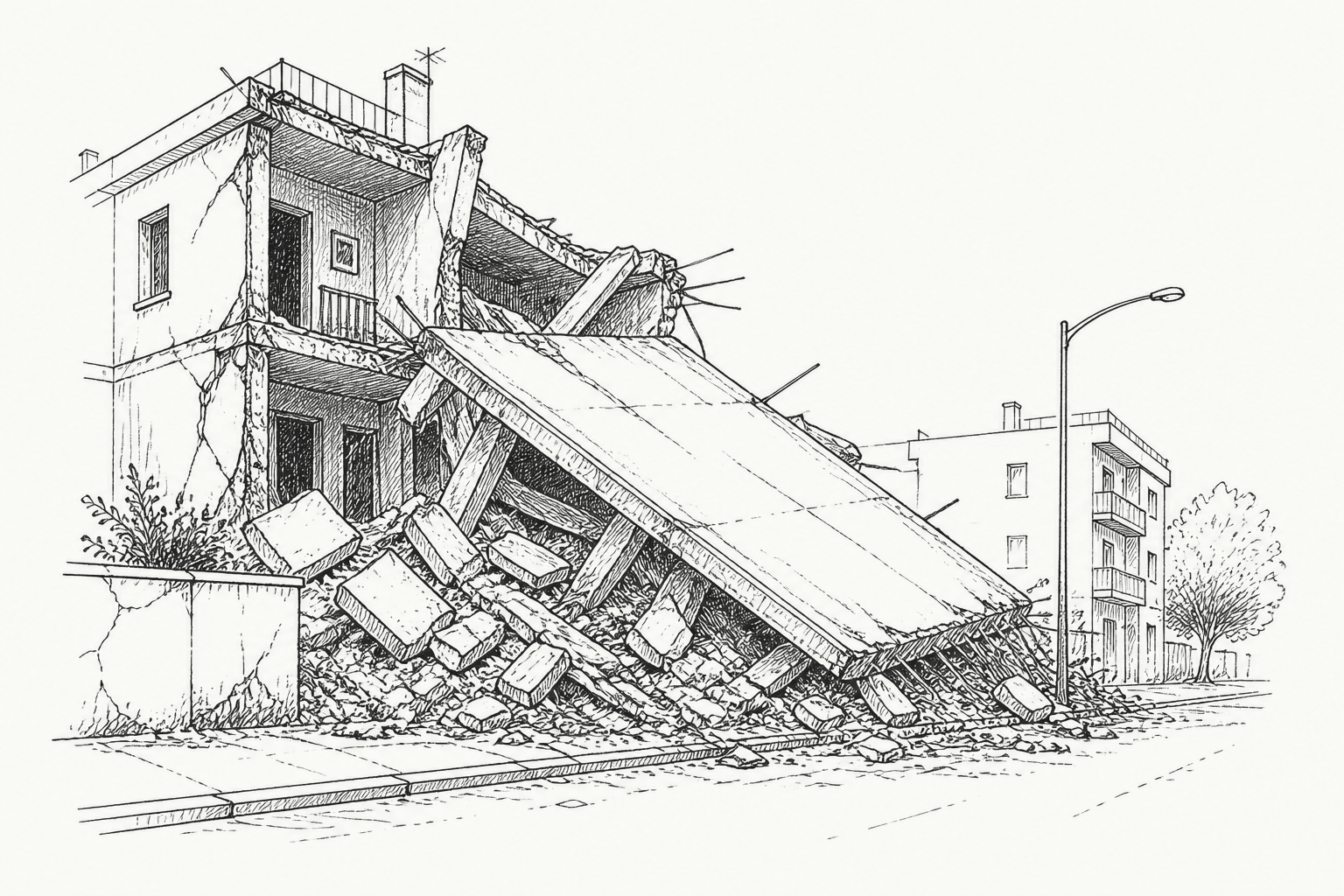
The death toll from Venezuela's twin earthquakes surpassed 2,600 on Friday and nearly 50,000 people remain unaccounted for as families crowded a makeshift morgue in La Guaira to identify loved ones from more than 1,000 photographs of unidentified bodies.
The scale of the disaster is overwhelming local services 10 days after the June 24 quakes, forcing Venezuelan authorities to convert a port storage facility called Los Silos into a body-identification site staffed by forensic teams working from dental records. The toll has climbed by nearly 1,200 since last Sunday, when the National Assembly reported 1,450 dead.
Acting President Delcy Rodriguez said at least 2,595 people have died and 12,400 have been injured, and that "the country has experienced more than 862 aftershocks." The Communication and Information Ministry updated the count on July 3 to 2,645 dead and 12,666 injured, with 6,462 people rescued and 86,117 families receiving aid. Lawmaker Jorge Rodriguez said 26,403 people have been affected overall.
At the port
Inside Los Silos, hundreds of bodies lie in rows wrapped in plastic bags and exposed to the sun, the BBC reported. More than 1,000 images cycle across two television screens where relatives search for tattoos, bracelets or clothing to match against victims whose features have become difficult to recognize. A tent at one end of the site offers free cremation.
Liliana González, 60, identified her 37-year-old nephew by a tattoo after traveling from Catia La Mar to look for her aunt. "This is like a horror movie," she said as she left.
Jéssica Soto, 42, has been waiting two days at the entrance for the remains of her 15-year-old daughter and 3-year-old granddaughter, whose bodies were recovered on Tuesday. "They keep you waiting and waiting for the paperwork, the trucks, and who knows what else," she told BBC Mundo.
Rescue continues
Search teams have pulled survivors from rubble more than a week after the quakes. Hernán Alberto Gil Flores was extracted Thursday after 120 hours beneath a collapsed shopping mall. Two days after the initial quakes, Dayana Patiño and her 18-day-old son Juan David were pulled from a collapsed apartment, with rescuers threading a straw through debris to give the infant water. More than 3,300 international rescue workers have deployed alongside about 30,000 Venezuelan personnel.
The caveat
The casualty figures are almost entirely government-sourced through the presidency, the National Assembly and the Communication and Information Ministry. The International Rescue Committee said children are among the missing and that water infrastructure has failed in some regions, limiting survivors' access to safe drinking water.
Los Silos remains open. González expects to return to search the screens for her aunt, whose body remains buried in the rubble.