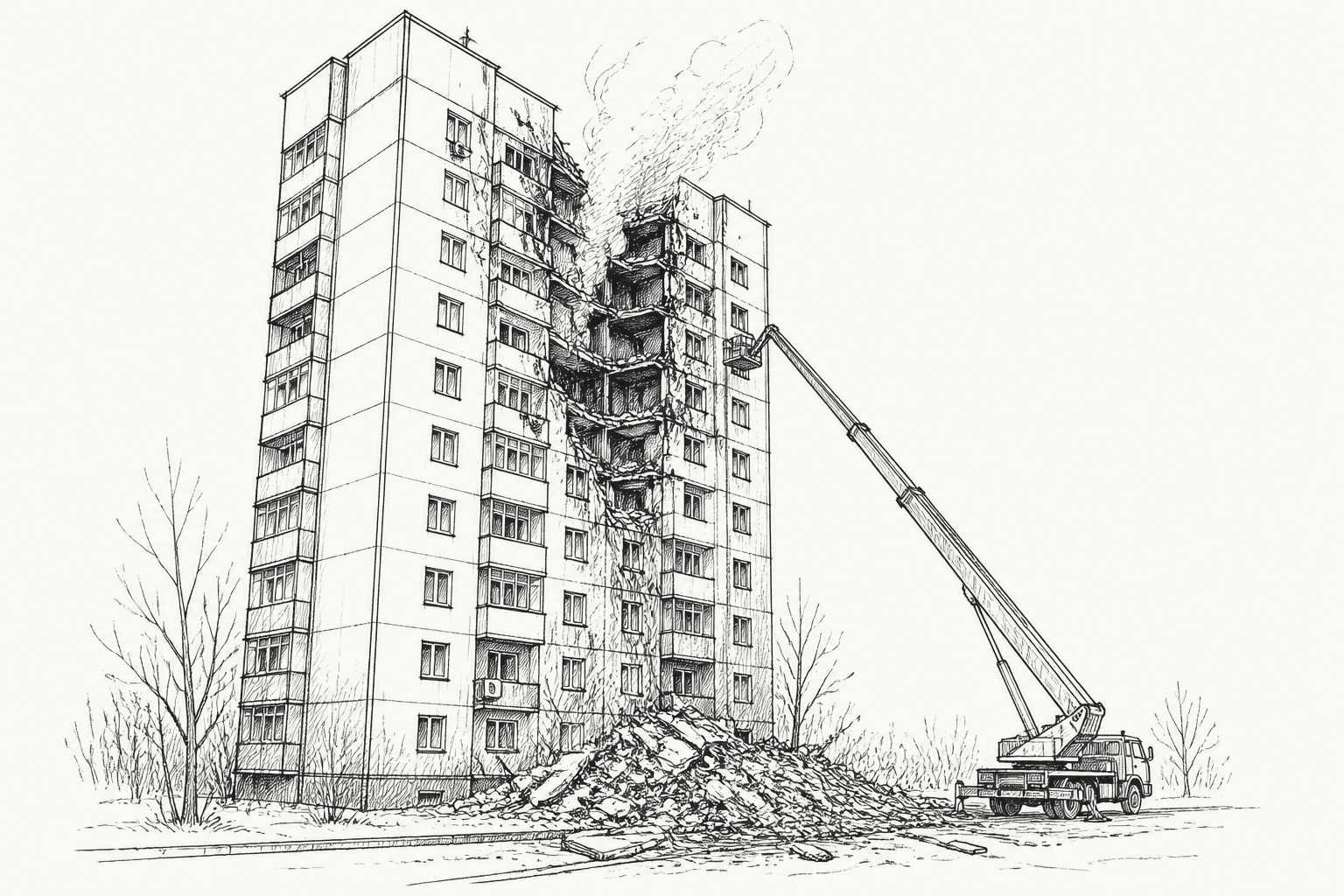
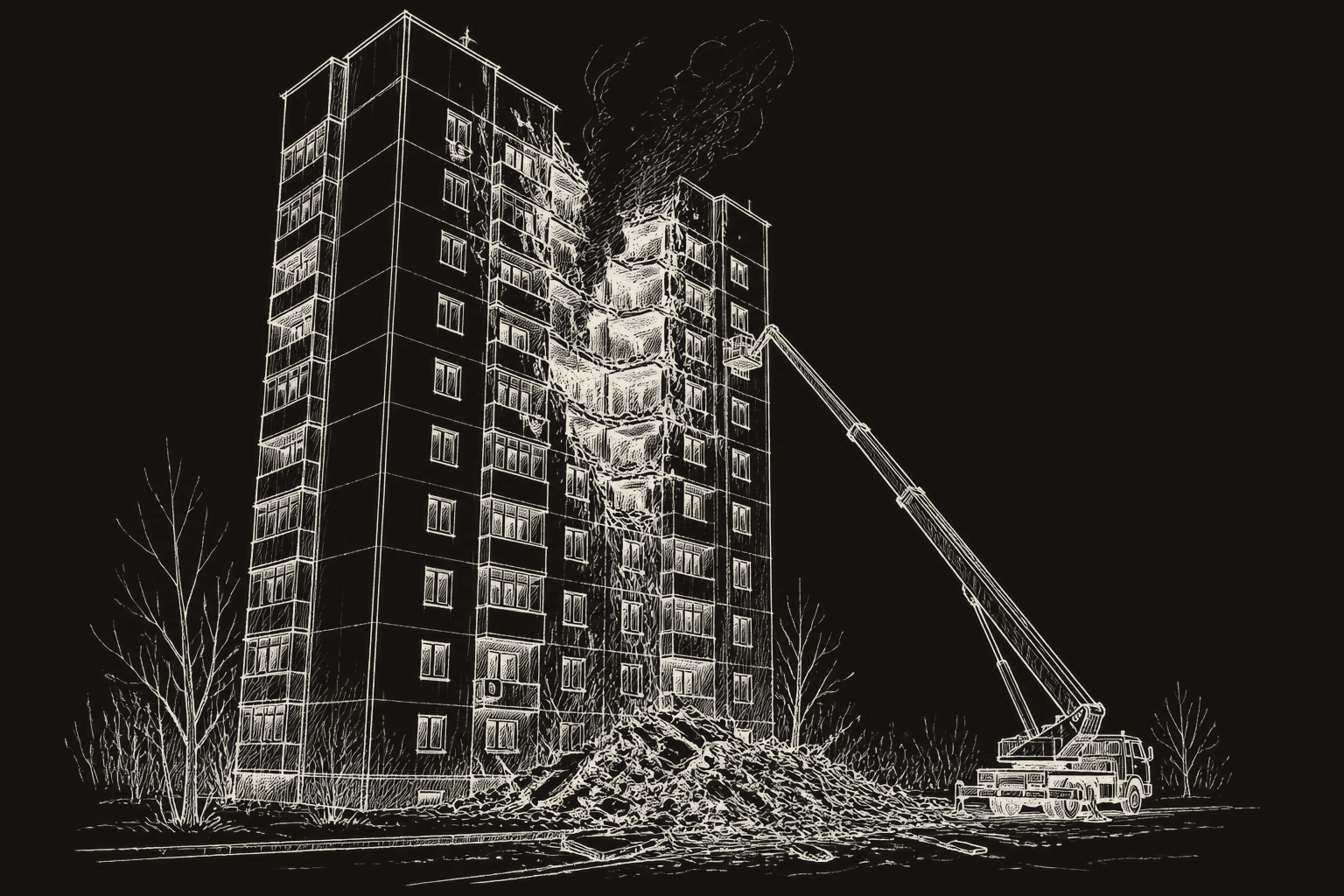
The death toll from Wednesday's Russian missile-and-drone barrage on Kyiv climbed to 30 on Thursday as rescuers dug through the wreckage of a collapsed nine-story apartment block on the capital's left bank, Ukrainian officials said, and Kremlin spokesman Dmitry Peskov told reporters that Moscow would "continue to increase pressure on the Kyiv regime in order to achieve our set goals."
The higher count, up from the 18 fatalities reported when the smoke first cleared, sharpens the contrast between Russia's costly one-off missile salvos and Ukraine's slower, cheaper drone campaign against Russian oil refineries, which has now triggered gasoline lines in Moscow and forced President Vladimir Putin into a rare admission of shortages. Peskov's vow to press on suggests the next round of retaliatory strikes is a matter of when, not whether.
What Kyiv counted
Timur Tkachenko, head of Kyiv's military administration, put the injured count at 91. Kyiv's metro authorities said 52,500 people, including 4,500 children, sheltered in underground stations overnight Wednesday, the highest such number in "recent years." Ukraine's air force said Russia fired 74 missiles and 496 drones in the 11-hour attack; 25 ballistic missiles and 12 drones got through to hit 33 locations.
The heaviest damage was in the Darnitskyi district on Kyiv's left bank, where two missiles struck a residential block. One left a crater beside a kindergarten; the second, the BBC reported from the scene, collapsed the end of a nine-story building, sliding it "off the face of the building, into a heap of concrete." Rescuers spent Thursday searching for residents believed to have sheltered in the basement. The Ukrainian Red Cross said its Kyiv warehouse was destroyed, wiping out about 320,000 relief items the charity valued at 79 million Ukrainian hryvnia, or roughly 1.3 million pounds.
Moscow's pump problem
Wednesday's barrage came as Ukraine's spring drone campaign, described by President Volodymyr Zelensky as a "40-day blitz" on Russian oil infrastructure, ground through refineries from the Volga to the Black Sea. Ukraine's General Staff said its drones struck one of Russia's largest refineries in the Nizhny Novgorod region east of Moscow overnight, setting off a fire, and hit a railway bridge over the Siverskyi Donets River used to move Russian troops and supplies. Kyiv's earlier strikes on Crimea have produced what AP called the worst fuel crisis on the peninsula since Russia annexed it in 2014.
Putin conceded the damage on June 28. "We observe a certain deficit," he said in televised remarks, adding that the drone attacks were "creating problems." On Rossiya 1, the pro-Kremlin talk-show host Vladimir Solovyov told viewers in mid-June that Russians must "get ready for hardships and self-sacrifice."
Anatoly, a 49-year-old Moscow taxi driver who gave only his first name for security reasons, told Al Jazeera the fuel now sold at the pump was "low-quality" and would ruin his white Kia's engine. "The engine already sounds like a sick heart," he said.
The Kremlin's frame
Russia's Defense Ministry cast the Kyiv attack as retaliation for what it called "terrorist attacks" by Kyiv on Russian civilian infrastructure, and said its weapons targeted Ukrainian arms plants, energy facilities and military airfields. Peskov said the strikes hit "military or military-linked targets" only. Ukrainian Foreign Minister Andriy Sybiha called that framing "immoral," saying: "In this war, there is an aggressor and a country defending itself."
That Kremlin framing, that the Kyiv strikes answer a sustained Ukrainian campaign against Russian civilians, reaches readers today only through Moscow's own channels. None of the body-tier wires sourced for this report were right-of-center outlets that have tended to amplify or scrutinize Russia's retaliation narrative on its own terms; the framing is neither corroborated nor pushed back on by an independent conservative Western source.
Trump and Zelensky are both expected at next week's NATO summit in Turkey. Zelensky on Thursday asked Washington to grant Ukraine licenses to manufacture Patriot air-defense missiles at home.