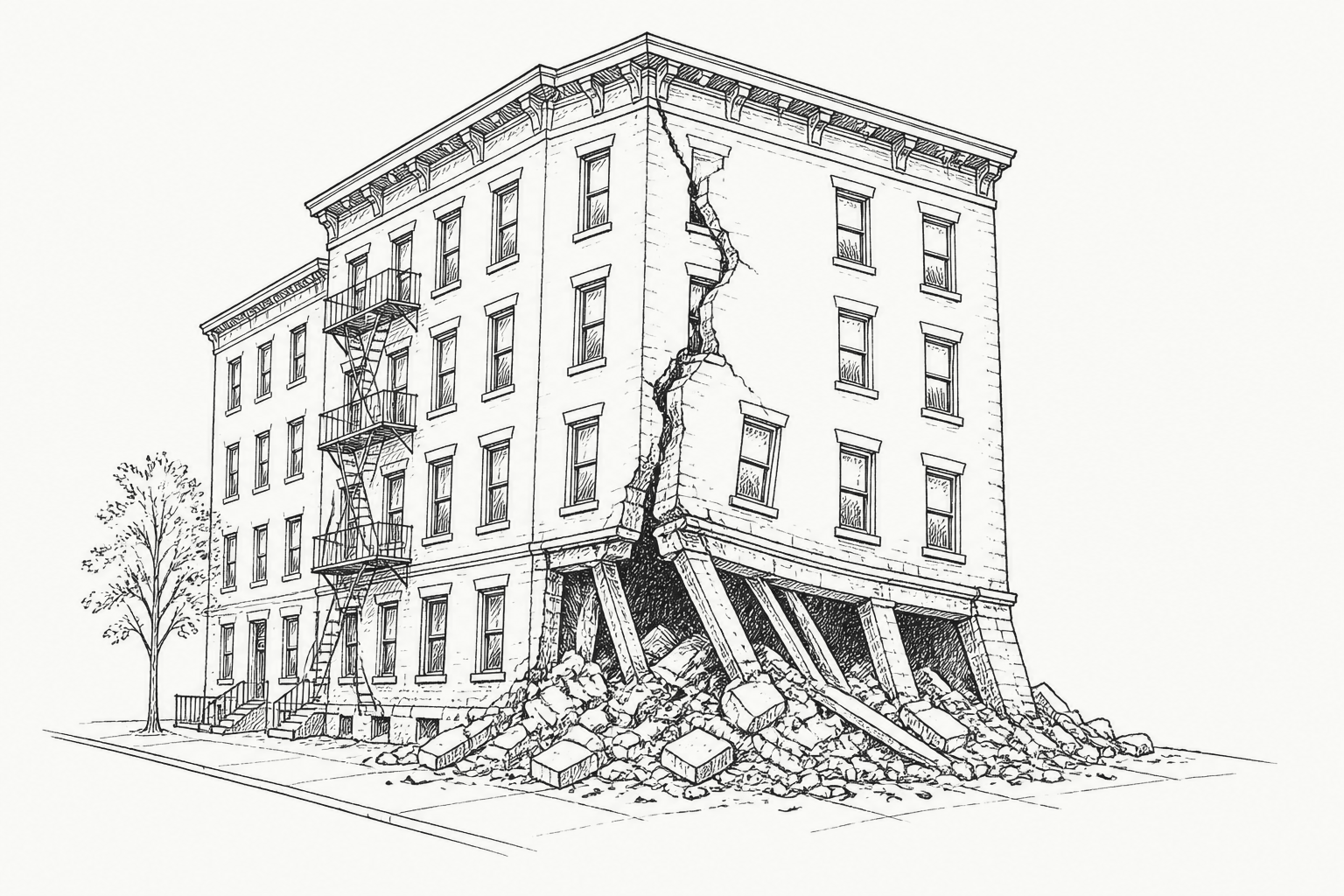
Two of the strongest earthquakes to strike Venezuela in more than a century killed at least 164 people and injured 971 Wednesday evening, leveling buildings across Caracas and the coastal state of La Guaira and prompting acting President Delcy Rodriguez to declare a state of emergency. The U.S. Geological Survey put the back-to-back temblors at magnitudes 7.2 and 7.5, separated by 39 seconds and centered roughly 17 to 21 miles northwest of the town of Montalban.
The scale of the destruction has already overtaken the official count. The USGS issued two consecutive red alerts through its PAGER modeling system and estimated a 41 percent probability that deaths could exceed 10,000 and a 17 percent chance they could reach 100,000. The agency projected the disaster could reduce Venezuela's gross domestic product by as much as 7 percent.
On the ground
La Guaira, on the country's northern coast, was the hardest hit, Rodriguez said in a national address. "Dozens of buildings have collapsed and we are engaged in the arduous task of rescuing the lives that God allows us to save," she said. "The state of La Guaira is facing a true tragedy and has become a disaster zone." Communications outages have hampered damage assessments from the state, where field hospitals in the capital have been flooded with the injured.
In Caracas, an Agence France-Presse journalist saw a 22-story building completely destroyed in the Altamira neighborhood, where rescuers pulled survivors from the rubble as relatives searched for missing family members. The quakes damaged Simon Bolivar International Airport severely enough to force its closure, Rodriguez said, and the government canceled classes for several days and designated some schools as shelters.
Residents slept in squares, on sidewalks and in parked cars rather than return to swaying buildings. "I've never experienced anything like it," Coro Martinez, a 56-year-old in eastern Caracas, told Reuters. "There was a very loud crash. Things fell in the house, jugs inside the refrigerator." Tsunami advisories briefly issued for Puerto Rico and the U.S. Virgin Islands were canceled later Wednesday night.
Washington moves
President Trump pledged a rapid U.S. response within hours of the second quake. "The U.S. stands ready, willing, and able to help," Trump wrote on Truth Social Wednesday evening, calling Venezuelans the country's "new and great friends" and saying he had instructed all federal agencies to move quickly. Secretary of State Marco Rubio spoke with Rodriguez and confirmed Thursday that the War Department would handle logistics around the shuttered Caracas airport. "It'll be big, it'll be fast, and it'll be effective," Rubio said.
Undersecretary of State for Foreign Assistance Jeremy Lewin said the department had mobilized a disaster assistance team and task force to coordinate search-and-rescue crews, medical supplies and humanitarian shipments. Argentina, Bolivia, Brazil, Chile, China, Ecuador, El Salvador, Mexico, Panama and Uruguay also offered aid; the Dominican Republic and Qatar dispatched rescue brigades.
A diplomatic pivot
The speed of the American response marks a turn in Washington's posture toward the interim government installed after the January military operation that removed Nicolas Maduro. The United States has remained Venezuela's largest oil buyer since then, with the value of U.S.-controlled crude exports rising to $3.7 billion in April from $600 million in January, according to the Council on Foreign Relations, which estimates roughly $8 billion has moved through the arrangement.
Rubio acknowledged the quakes are a "setback" to stabilization efforts five months into the post-Maduro transition. Exiled opposition leader Maria Corina Machado, who has kept her distance from the Rodriguez government, wrote on X: "My heart, my infinite embrace, and my prayers are with every Venezuelan home in these hours of anguish." She called for "strength, serenity, and solidarity" without addressing the political arrangement directly.
The USGS has warned of strong aftershocks in the coming days. Rescue operations in Altamira and La Guaira were continuing into Thursday, with Interior Minister Diosdado Cabello urging residents to stay outside and check on neighbors. "We understand that some people may be desperate, but we are acting according to protocols to activate aid and rescue efforts to help those who need it most," Cabello said on state television.