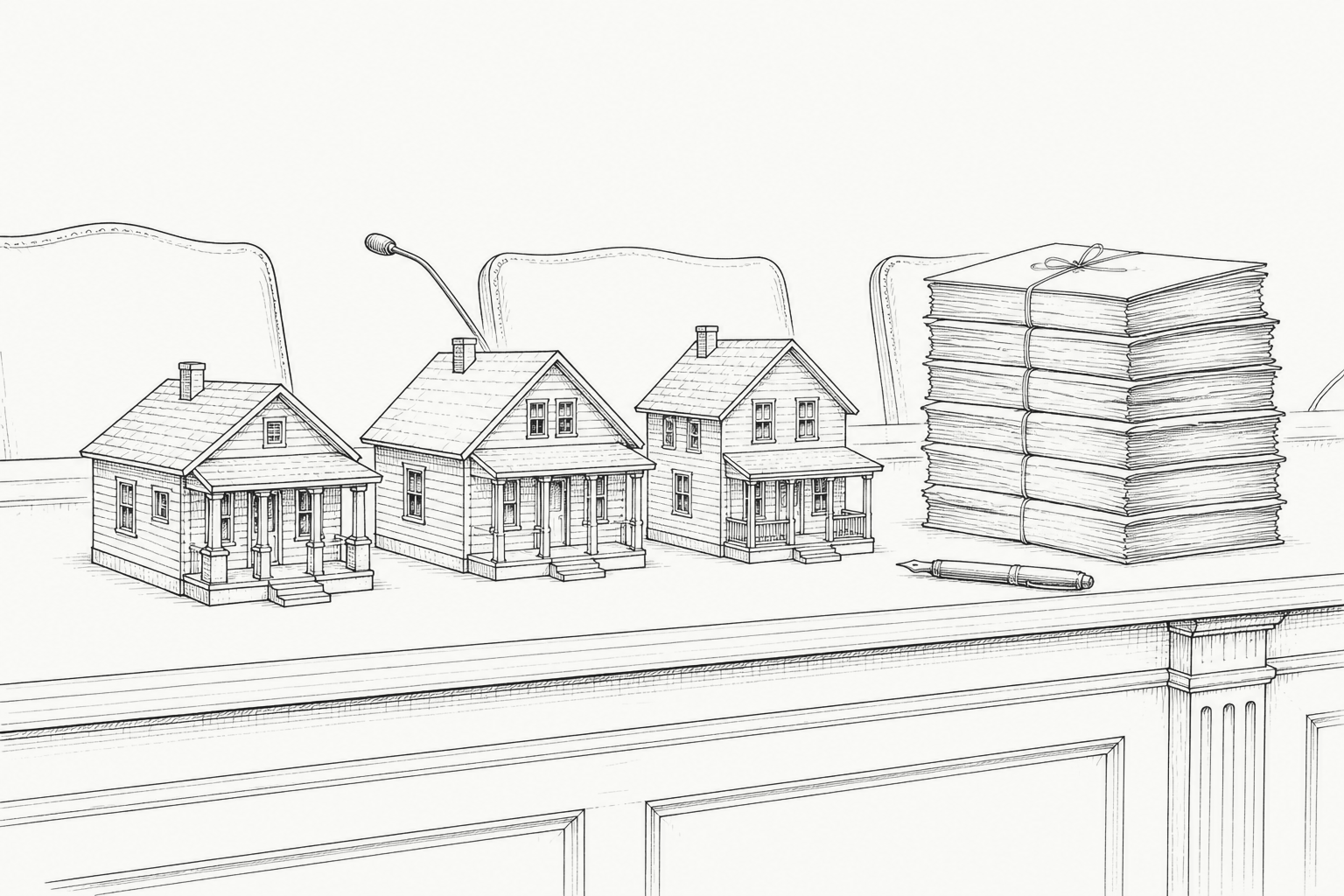

The Senate passed the 21st Century ROAD to Housing Act on Monday by a vote of 85 to 5, sending to the House a bipartisan package that would cap institutional investors' ownership of single-family homes and loosen federal rules on new construction. The House is expected to take up the measure later this week, and President Trump has signaled he will sign it.
The legislation marks the first significant federal response to a housing shortage that the U.S. Chamber of Commerce puts at more than 4.7 million homes, and it gives both parties an affordability win to carry into the 2026 midterm campaign. It would be the most consequential housing law since 1990, according to Sen. Elizabeth Warren, D-Mass., who co-led the bill with Sen. Tim Scott, R-S.C.
The investor curb
A section titled "Homes Are For People, Not Corporations" bars any large institutional investor from buying single-family homes once it owns or builds 350 units. An earlier Senate draft would have forced investors above the cap to divest any additional homes within seven years; that sell-by provision was dropped in last week's four-corners negotiation after lawmakers in both parties argued it would discourage new construction.
The final text preserves the 350-unit ceiling. Warren, who has framed the institutional-investor cap as the heart of the bill, said on the Senate floor that the measure is about "stopping private equity from buying up homes" and raising costs for consumers, NBC News reported.
Supply-side measures
The rest of the package leans on supply. It authorizes new federal grant and funding streams for construction, ties Community Development Block Grant money to local efforts to expand housing, and creates a pilot program to convert vacant units into housing. It also rolls back federal regulations and empowers local governments to fast-track project reviews.
Neil Bradley, chief policy officer at the U.S. Chamber of Commerce, said in a statement last week that "with America facing a shortage of over 4.7 million homes, expanding supply remains the most effective and sustainable way to improve affordability, support workforce mobility, and strengthen local economies."
Scott, the top Republican on the Senate banking panel, told colleagues ahead of the vote: "Housing prices are too darn high and housing supply too low. Rent is too high. Starter homes — too hard to find. And that American dream slips further and further away for far too many."
How it came together
The Senate passed its version in March and the House passed a different one in May, and the bill then stalled for months. The Senate accepted several House provisions and dropped the seven-year divestment requirement to break the impasse. The negotiation involved Scott and Warren in the Senate and Reps. French Hill, R-Ark., and Maxine Waters, D-Calif., who lead the House Financial Services Committee.
Several senators missed Monday's vote because thunderstorms in the Washington area triggered a ground stop at Ronald Reagan National Airport, NBC News reported. Five voted no; the bill does not list dissenters in the sources reviewed.
Counterpoint
Today's reporting comes from center and lean-left outlets, and substantive opposition from the right was thin in the coverage. Sen. John Kennedy, R-La., who voted for the bill, offered the closest thing to a caveat about the White House's role, telling reporters one day before the deal was reached that Trump "hasn't really been very hands-on in getting this bill across the finish line." According to CNBC, lawmakers on both sides of the aisle had earlier worried that the seven-year sell-by provision "would stifle the creation of new housing" — an objection that helped strip the divestment clause from the final text but did not derail the 350-unit cap.
The House is expected to vote later this week. If it accepts the Senate text without amendment, the bill would move to the president's desk for signature.