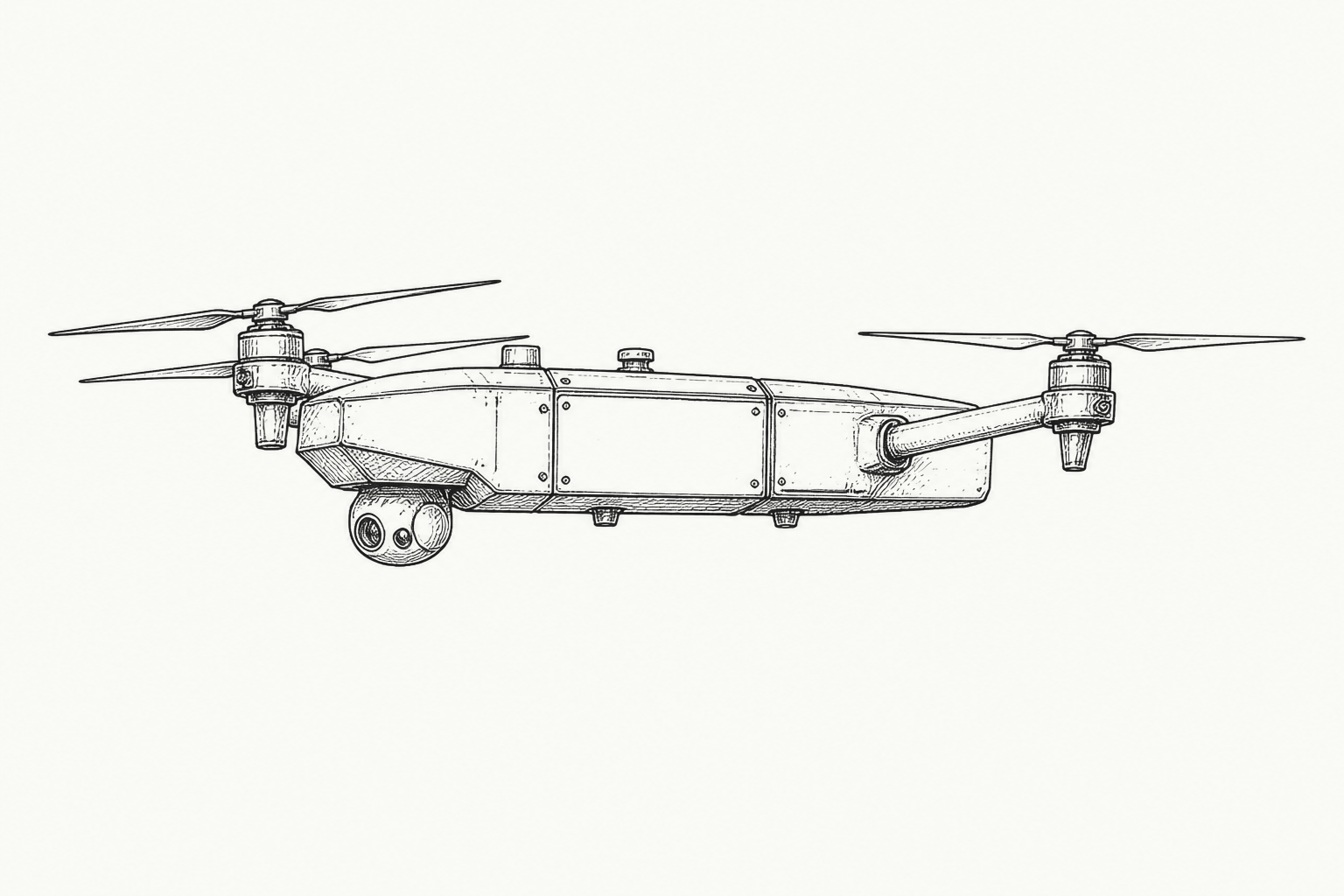
U.S. Central Command shot down four Iranian attack drones over the Strait of Hormuz on Friday and intercepted six of seven Iranian ballistic missiles fired hours later at Kuwait and Bahrain, then struck Iranian coastal radar at Goruk and on Qeshm Island, the sharpest exchange between the two sides since an Iranian drone killed one person at Kuwait International Airport on Wednesday.
The sequence dragged a fragile U.S.-Iran ceasefire deeper into open combat and put two more Gulf monarchies that host U.S. bases under direct fire, while stalling indirect talks in which Washington wants the Strait of Hormuz reopened and Tehran wants sanctions waivers, frozen assets released and the U.S. blockade of its ports lifted.
The intercepts
CENTCOM said the four one-way attack drones it destroyed near the Strait of Hormuz "posed an immediate threat to regional maritime traffic" and that "U.S. forces subsequently struck Iranian coastal surveillance radar sites in Goruk and on Qeshm Island to defend against further attacks," the command added. Iran then fired seven ballistic missiles at Kuwait and Bahrain; six were intercepted and the seventh missed, CENTCOM said. Bahrain's air defenses brought down three, the kingdom's military said, adding that its forces "are at the highest readiness" should attacks continue. Kuwait's army said it was contending with "hostile missile and drone attacks," and Bahrain's interior ministry sounded sirens telling residents to "remain calm and head to the nearest safe place," according to a ministry post.
Iran's Islamic Revolutionary Guard Corps said the strikes were retaliation for earlier U.S. action and that it had also fired on four tankers attempting to cross the all-but-closed Strait of Hormuz. Al Jazeera's Almigdad Alruhaid reported from Tehran that the IRGC warned "this kind of aggression from the United States in the region will not go unanswered."
Lebanon widens
The Lebanese army said an Israeli strike on the Khardali-Nabatieh road killed several soldiers, including an officer, on Saturday morning. Lebanon's health ministry said 32 people were killed in the country over the previous day, bringing the toll since the war began on March 2 to 3,558. Hezbollah on Thursday rejected a U.S.-brokered Israel-Lebanon truce that did not include the group or require an Israeli withdrawal. Iran has insisted any U.S.-Iran deal must also end the Lebanon fighting. Iranian Foreign Minister Abbas Araghchi rejected Lebanese President Joseph Aoun's characterization of Beirut as a bargaining chip for Tehran, saying "Had Lebanon been bargaining chip for Iran, we'd have a deal long ago."
Oil at $97
U.S. retail gasoline averaged $4.22 a gallon Friday, about $1.10 above a year earlier, according to AAA. President Trump told reporters oil is at "$97 a barrel instead of $300 a barrel" because tankers are still moving. GasBuddy's Patrick De Haan told CBS News pre-war pricing is unlikely to return until mid- to late-2027.
The relief valve has been the Bab el-Mandeb, the Red Sea chokepoint where Saudi crude redirected via the East-West Pipeline now flows to Asia. Exports through the strait nearly doubled to 7.2 million barrels per day in April from 3.9 million in February, before the U.S. and Israel attacked Iran, according to Kpler. Iran's Revolutionary Guard threatened Monday to close the Bab el-Mandeb if Israel did not halt strikes in Gaza and Lebanon. "That would be a step up in terms of escalation and in terms of market impact," said Matt Smith, Kpler's director of commodity research.
The counterparty
Mohsen Rezaei, a military adviser to Iranian Supreme Leader Mojtaba Khamenei, told CNN the indirect talks "are at a deadlock and Trump must break this deadlock" and demanded Washington unseal billions in frozen Iranian assets as "a sign of trust-building" and a "test that America must pass." Trump, asked by NBC's Kristen Welker why Iran has not signed, said Tehran is "proud" and that prior administrations "allowed them to get away with murder" on the issue. He told reporters Friday in Wisconsin that "the situation with Iran seems to be going quite well" and the war is "largely finished" one way or another.
The House on Thursday rejected a war powers resolution from Rep. Rashida Tlaib ordering U.S. forces out of Lebanon within seven days, 92-324.