President Trump told Fox News he is in "no hurry" to close a deal with Iran, in an interview with his daughter-in-law Lara Trump aired Saturday, even as U.S. Central Command said American forces fired a Hellfire missile into a Gambia-flagged cargo ship trying to breach the U.S. blockade of Iranian ports. The dual signals came on day 93 of the war and a day after Trump sent the draft U.S.-Iran memorandum back to Tehran with tougher terms.
The shift hardens the U.S. negotiating posture just as Thursday's tentative 60-day ceasefire extension appeared within reach. U.S. officials now expect Tehran to take days, not hours, to respond, prolonging the closure of the Strait of Hormuz.
What Trump said
In the interview taped Thursday, Trump said gasoline prices would come "tumbling down" if a deal reopened the strait, but added that "if you're going to be in a hurry, you're not going to make a good deal." He told Lara Trump that Tehran has agreed not to develop a nuclear weapon and that the latest draft also bars Iran from purchasing one. If talks collapse, he said, "we're going to end it a different way."
Al Jazeera, citing The New York Times and Axios, reported that Trump's Friday edits toughened multiple provisions, including what to do with Iran's nuclear material. CBS News said it was the third round of presidential edits passed through Pakistani mediators.
The Lian Star
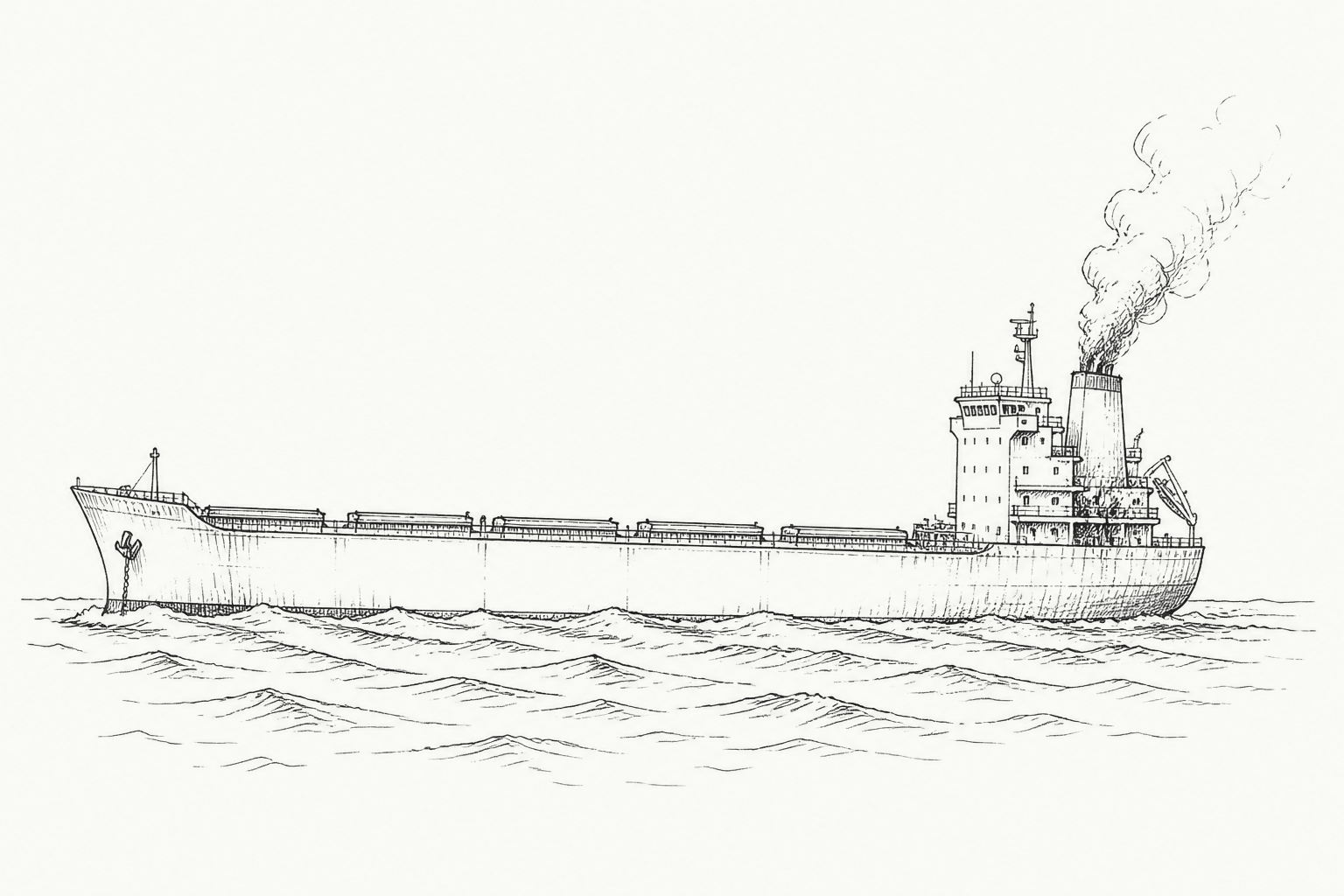
CENTCOM said the 232-foot bulk carrier Lian Star ignored more than 20 warnings overnight before a U.S. aircraft disabled its engine room in the Gulf of Oman. The vessel is the sixth ship U.S. forces have stopped since the April 17 blockade began; another 116 have been redirected and one was allowed through. U.S. forces have not boarded the Lian Star, which remains adrift.
Iran's joint military command, in a statement carried by state TV, warned that "Any violation of these regulations will place the security of their passage at serious risk," reasserting Tehran's claim to police transits through the strait.
The market read
About 20 percent of the world's oil and liquefied natural gas moved through Hormuz before the war. Analysts told CNBC that even a signed deal may not restore prewar flows. Richard Meade, editor-in-chief of Lloyd's List, projected traffic at 60 percent to 70 percent of prewar volumes, with China-affiliated ships moving freely and Western vessels requiring bilateral arrangements with Tehran. Helima Croft of RBC Capital Markets wrote that any settlement leaving Iran in operational control of the strait "will result in appreciably lower flows through the waterway."
The counterpoint
Iran's chief negotiator, Mohammad Bagher Ghalibaf, said Sunday that Tehran would not agree to any deal with Washington unless it secured Iranian rights, according to Al Jazeera. Iran's Fars news agency disputed Trump's public summary of the draft, describing his Truth Social statement as "a mixture of truth and lies" and saying the text does not require Iran to surrender its enriched uranium or reopen the strait toll-free. Iran's Foreign Ministry has said there are "no negotiations" on the nuclear program at this stage, CBS News reported.
A decision from Tehran is expected within the week, a senior U.S. official told Axios. Until it arrives, the blockade and Iran's counter-restrictions remain in force.