NASA on Tuesday outlined the first phase of a permanent moon base at the lunar south pole, awarding hundreds of millions of dollars in contracts to four U.S. companies to deliver landers, rovers and drones to the surface before the first Artemis astronauts arrive.
The awards lock in the hardware backbone of a program that NASA Administrator Jared Isaacman has said will consume roughly $20 billion over the next seven years, and they push the agency past planning and into procurement less than two months after April's Artemis II flyaround of the moon.
Who got the work
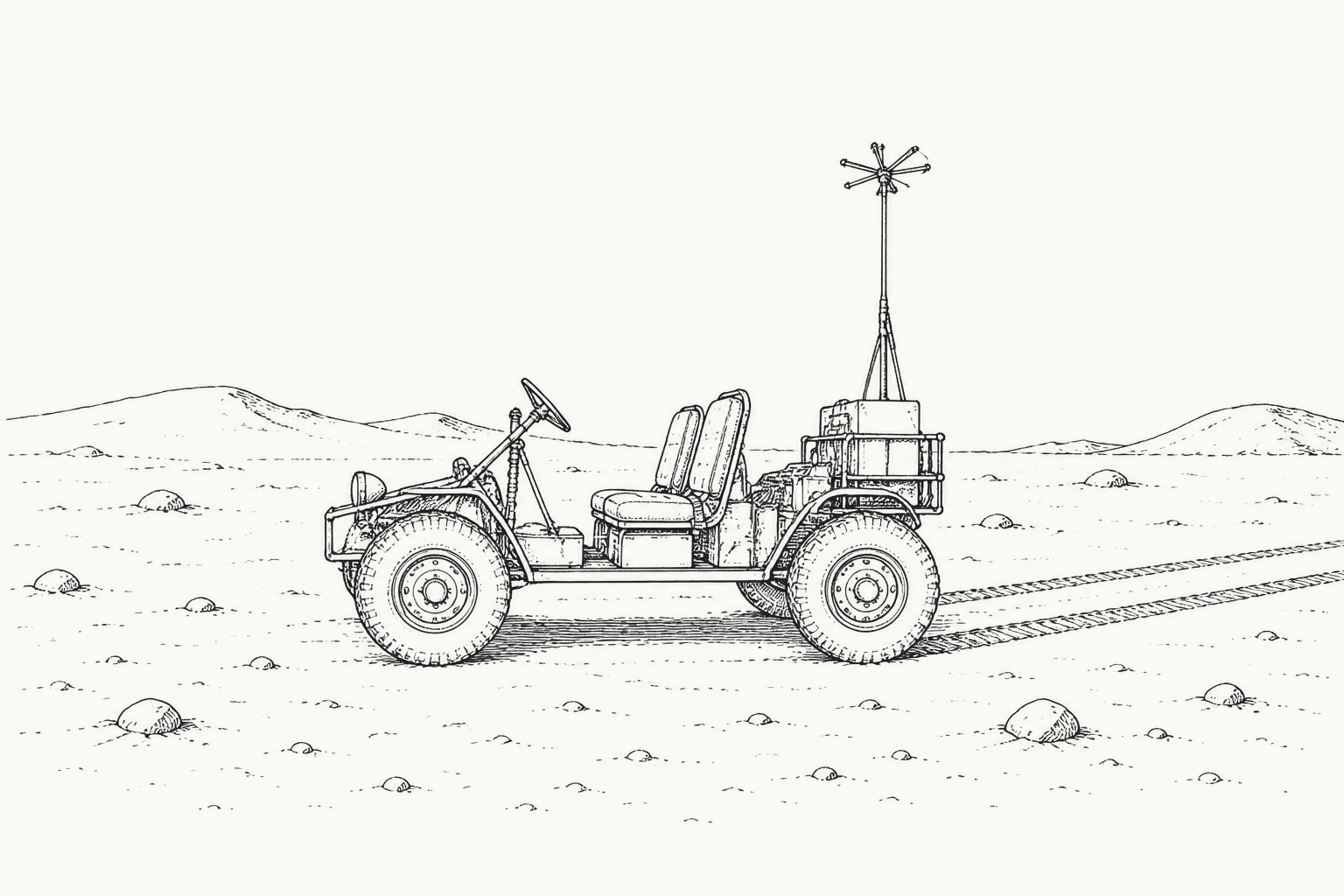
Jeff Bezos' Blue Origin will provide a pair of landers to ferry moon buggies to the surface near the south pole. The so-called lunar terrain vehicles will be built by Astrolab and Lunar Outpost. Firefly Aerospace, which landed on the moon last year, will deliver the first drones.
The equipment is meant to be in place before two astronauts step onto the surface during Artemis III, which NASA is targeting for as soon as 2028. The agency is aiming for a mid-2027 test flight in which an Artemis III crew will practice docking the Orion capsule in Earth orbit with crewed landers being developed by Blue Origin and Elon Musk's SpaceX.
A perimeter of drones
Carlos Garcia-Galan, the agency's moon base program executive, said the base is envisioned to sprawl over hundreds of square miles, with a perimeter marked by drones dubbed MoonFall stationed at the corners. Isaacman said those territory markers are meant to be respectful of other countries' spacecraft and equipment that might be nearby, and that he expects reciprocity.
The second phase, running from 2029 into the early 2030s, is to build out permanent infrastructure including a power grid. Habitats capable of supporting astronauts for extended stays are not expected until sometime in the 2030s, in a third phase.
"Then we'll be able to say, 'Hey, we're permanently here and we're not giving it up,'" Garcia-Galan said.
The bill
The Planetary Society, the space advocacy group co-founded by the late Carl Sagan, estimates NASA will have spent about $107 billion in inflation-adjusted dollars on its return-to-the-moon effort through 2026, CBS News reported. Isaacman has said the moon base itself will cost about $20 billion through the early 2030s, on top of that running tab.
Isaacman framed the program as the seed of a lunar economy and a staging ground for an eventual Mars expedition. "For those waiting patiently, the grand return is close at hand and we will not slow down," he said Tuesday. "We are really just getting started."
Counterpoint
The schedule is the obvious risk. Artemis III has already slipped repeatedly, the crewed landers are still in development, and last Friday's Starship V3 test flight lost multiple Super Heavy engines on descent. No critics of the moon base contracts or the 2028 timetable were quoted in Tuesday's body-tier coverage from CBS News or the Associated Press, which carried the news through PBS NewsHour.
The next public milestone is the Artemis III docking rehearsal in Earth orbit, which NASA is aiming to fly in mid-2027.