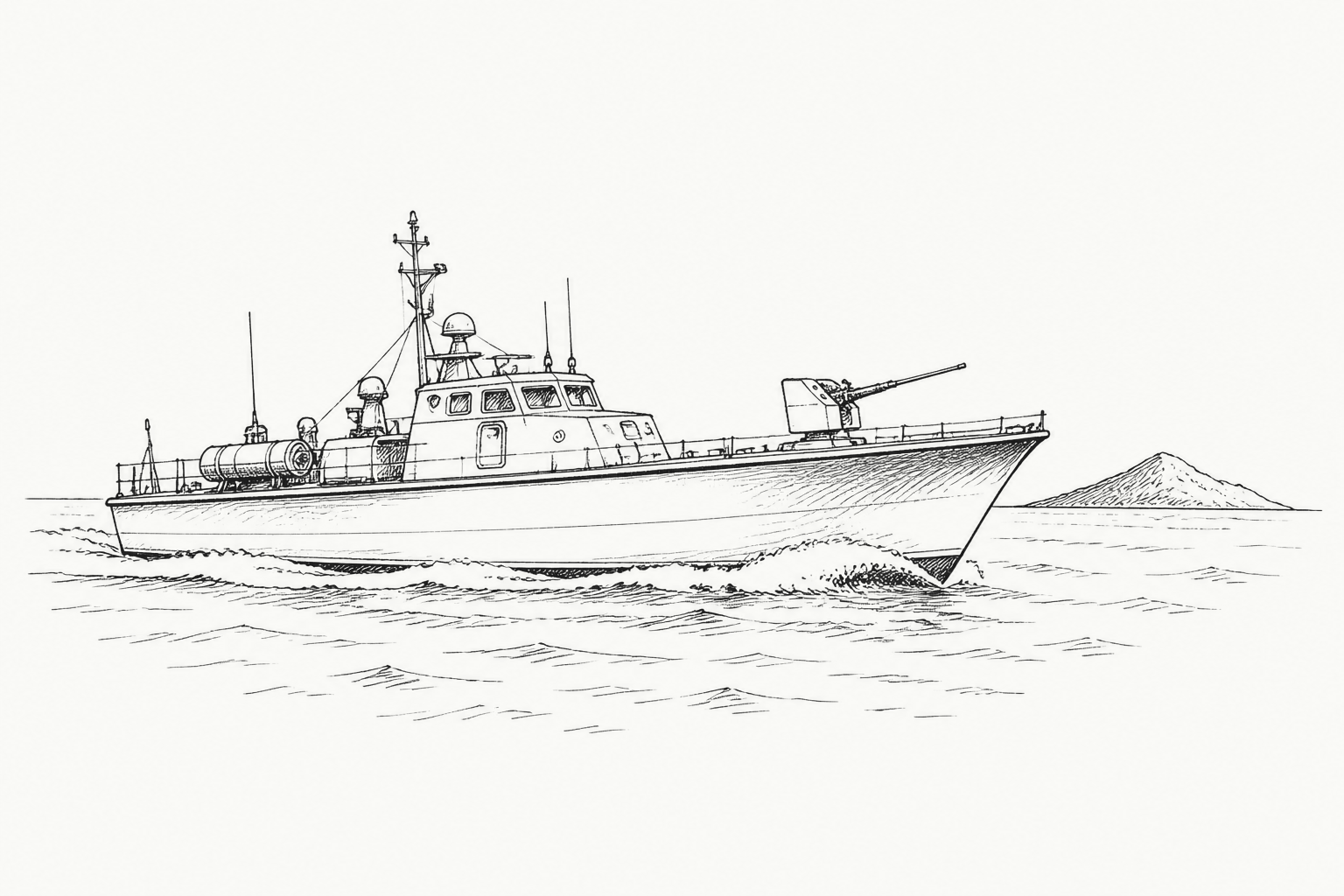
U.S. forces struck targets in southern Iran early Tuesday, hitting missile launch sites and small boats that U.S. Central Command said were trying to lay mines near the Strait of Hormuz, even as Secretary of State Marco Rubio said in India that a deal to end the three-month war was a matter of days and an Iranian delegation arrived in Doha for talks. A Telegram channel tied to Iran's Islamic Revolutionary Guard Corps named four navy personnel it said were killed in the overnight strikes.
The strikes are the most significant military action since Washington and Tehran agreed on April 8 to a Pakistan-mediated ceasefire, and they land in the middle of the closest the two sides have come to a written accord. Fox News, citing senior U.S. officials, said the draft memorandum of understanding was "95% there." Iran's Foreign Ministry said Monday that a "large portion" of issues had been resolved but that an agreement was not imminent.
What CENTCOM said
CENTCOM spokesman Capt. Tim Hawkins said American forces conducted "self-defense strikes in southern Iran today to protect our troops from threats posed by Iranian forces." He said targets included "missile launch sites and Iranian boats attempting to emplace mines" and that "U.S. Central Command continues to defend our forces while using restraint during the ongoing ceasefire." Iranian state-linked outlet SNN reported explosions near vessels south of Larak Island. Al Jazeera, citing Iranian media, reported blasts in Bandar Abbas, about 70 kilometers from the chokepoint through which roughly a fifth of global oil and gas passes in normal times.
Deal on the table
The draft memorandum, described to CBS News by two regional officials, includes a 60-day ceasefire extension, an Iranian commitment to end military operations on every front including Lebanon, an affirmation that Iran will not pursue nuclear weapons, and disposal of its enriched uranium stockpile under a mechanism still to be settled. Iran would reopen the Strait of Hormuz immediately and restore traffic to pre-war levels within 30 days, in exchange for the lifting of the U.S. blockade on Iranian ports. A senior administration official told CBS News that Tehran has agreed in principle to opening the strait and disposing of its uranium, but not to the Lebanon clause or the 60-day extension.
In a Truth Social post Monday, President Trump said the enriched uranium would "either be immediately turned over to the United States to be brought home and destroyed" or destroyed in place or at "another acceptable location" with the International Atomic Energy Agency present. He also pressed Saudi Arabia, Qatar and Pakistan to sign the Abraham Accords and normalize relations with Israel. A Pakistani source told Reuters the two issues were "not interlinked and cannot be made so."
On the Street
Oil prices split Tuesday morning. U.S. West Texas Intermediate futures fell about 5 percent to $91.87 a barrel, while Brent crude rose 2.14 percent to $98.20. The divergence followed a Monday session in which Brent slipped below $100 on optimism that Hormuz traffic would resume.
What Rubio said
Speaking to reporters in Jaipur, Rubio said the straits "have to be open. They're going to be open one way or the other, so they need to be open." On the negotiations, he said: "There were some talks going on in Qatar today, so we'll see if we can make progress. I think it's a lot of talking back and forth going on about specific language in the initial document, so it'll take a few days." He added that Trump is "either going to make a good deal or no deal." Trump wrote on Truth Social that talks were "proceeding nicely" but warned of a return to "the Battlefront and shooting, but bigger and stronger than ever before." Iranian Foreign Minister Abbas Araghchi, Parliament Speaker Mohammad Bagher Ghalibaf and Central Bank Governor Abdolnaser Hemmati were in Doha for the talks.
The Iranian view
Iran's military said the strikes killed four Revolutionary Guard sailors, naming Abbas Eslami, Ghodrat Zarangari, Abdolreza Golzari and Hossein Sotoudeh, who it said had been due to marry in coming days. Brig. Gen. Abolfazl Shekarchi, an armed-forces spokesman, told Al Jazeera before the strikes that any U.S. or Israeli action would draw retaliation that "will go beyond the boundaries of the region." He said Iran is "not seeking to build nuclear weapons." He added: "We possess conventional weapons that eliminate any need for them." The Revolutionary Guard said Tuesday it had downed an MQ-9 Reaper drone and fired on an RQ-4 and an F-35 entering Iranian airspace. The Pentagon has lost at least 16 Reaper drones over Iran since the war began.
China urged restraint. Foreign Ministry spokeswoman Mao Ning said the parties should "fulfil their ceasefire commitments, resolve disputes through peaceful means... and promote the early restoration of peace." The Trump administration had spent weeks pressing Beijing to lean on Tehran over Hormuz before saying it no longer needed China's help.
What's next
Lebanese and Israeli military delegations are scheduled to meet in Washington in three days for direct talks on a Hezbollah ceasefire, hours after an Israeli strike on a village in the Bekaa Valley killed 12, according to Lebanon's National News Agency. In Doha, negotiators are working on the memorandum's language. Rubio said it will take days. Trump said the alternative is a return to fighting bigger than before.