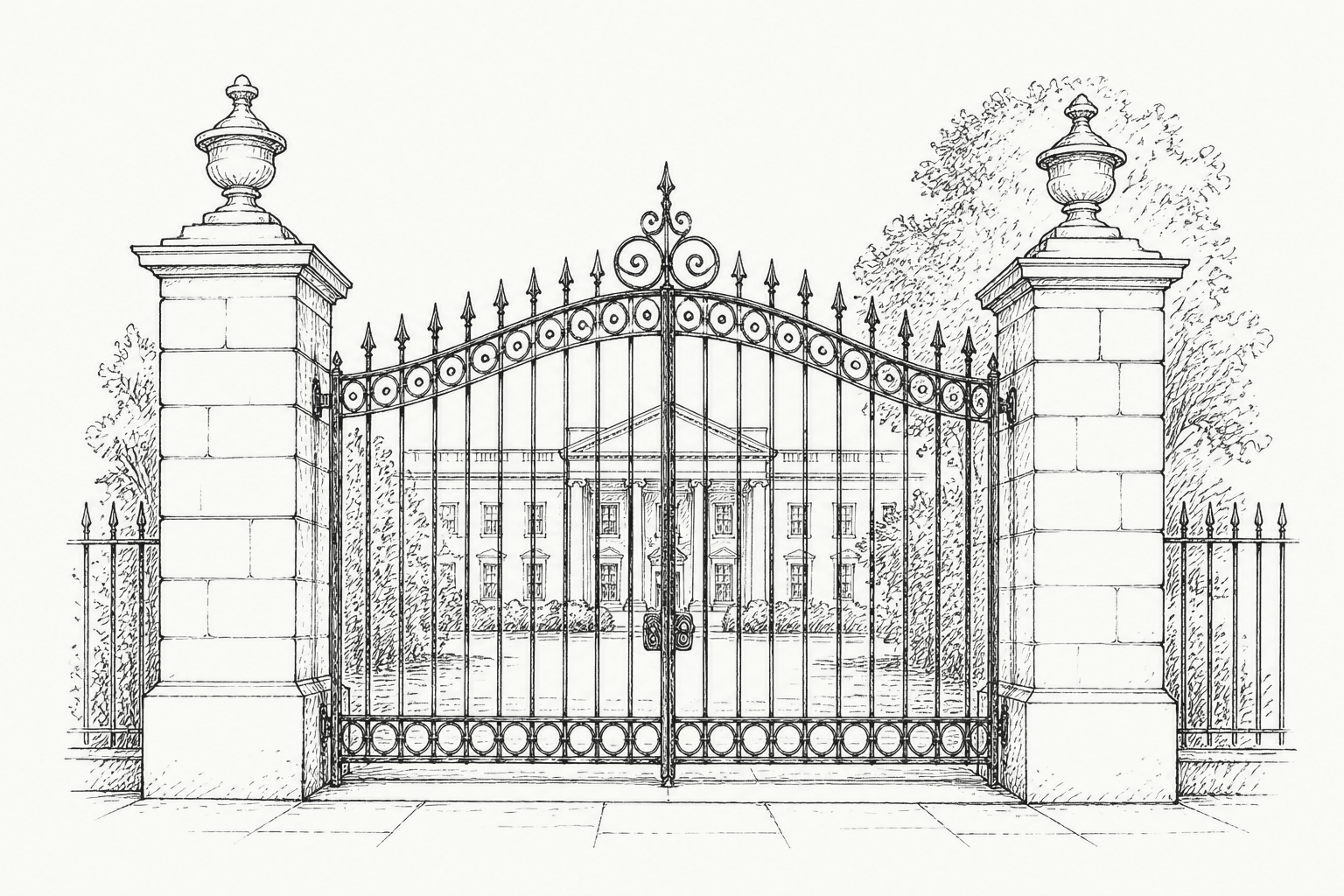
U.S. Secret Service officers shot and killed a man who opened fire on a security checkpoint at 17th Street and Pennsylvania Avenue NW just after 6 p.m. Saturday, briefly locking down the White House while President Trump was inside. A bystander was wounded in the exchange.
The shooting is the third attempt on Trump's safety in 22 months and the second in a month, raising fresh questions about the perimeter around a president who has made physical security a stated rationale for an East Wing construction project now entangled in a Senate fight.
What happened
The suspect approached the checkpoint, pulled a weapon from a bag and began firing on officers, the Secret Service said. Officers returned fire and struck him. He was taken to a hospital and later died. No agents were wounded. An NBC News team on the North Lawn reported hearing between 20 and 30 gunshots at 6:04 p.m., and agents with weapons drawn ordered reporters into the press briefing room. The lockdown was lifted at 6:46 p.m.
Six senior law enforcement officials identified the gunman as Nasire Best, 21, of Maryland. Five of those officials told NBC News he had a documented history of mental health concerns and prior encounters with the Secret Service.
A familiar face at the gates
Court filings in the Superior Court for the District of Columbia show Best was arrested July 10 on a charge of unlawful entry after walking into a restricted area near the White House. He told officers he was Jesus Christ and wanted to be arrested, the filing said. He was involuntarily committed in June for obstructing a vehicle entry to the complex. Reuters reported he had violated a "stay-away order" and had been classified as an emotionally disturbed person. CNN reported a social-media account linked to Best included a post that read, "I’m actually the son of God," and another that appeared to threaten Trump.
The Secret Service said the agency knew Best for repeatedly walking the complex perimeter and asking how to gain entry. A motive was not immediately clear.
The president's response
Trump, who was not injured, was briefed by the Secret Service, a White House official said. The agency said "no protectees or operations were impacted." Vice President JD Vance had been at the White House earlier in the day; his whereabouts during the shooting were not confirmed.
In a post on Truth Social early Sunday, Trump thanked agents for action "against a gunman near the White House, who had a violent history and possible obsession with our Country’s most cherished structure." He linked the attack to his proposed White House ballroom, calling for the construction of "the most safe and secure space of its kind."
FBI Director Kash Patel said on X that the bureau is on scene assisting the Secret Service, alongside the Bureau of Alcohol, Tobacco, Firearms and Explosives and the Metropolitan Police Department.
A pattern of close calls
Saturday's shooting is the third known attempt on Trump's safety since July 13, 2024, when Thomas Crooks fired from a rooftop at a rally near Butler, Pennsylvania, grazing the then-candidate's ear, killing audience member Corey Comperatore and critically wounding two others. In September 2024, Ryan Wesley Routh was spotted with a rifle near Trump's West Palm Beach golf course; he was later convicted and sentenced to life. On April 25, Cole Tomas Allen was subdued after firing shots near the security screening area at the White House Correspondents' Dinner at the Washington Hilton.
The counterpoint
The Secret Service, the FBI and Metropolitan Police described Saturday's incident as a perimeter shooting stopped at the perimeter, with no protectee endangered and no agents hurt. Today's account draws on lean-left wire and broadcast reporting; right-leaning coverage of the agency's gate-security record was not available at press time, and congressional oversight officials had not publicly weighed in on whether a man twice committed and repeatedly flagged at White House gates should have been kept further from the checkpoint.
The Secret Service said the shooting remains under investigation. The agency has not said when it will release surveillance footage or a timeline of Best's prior contacts with federal officers.