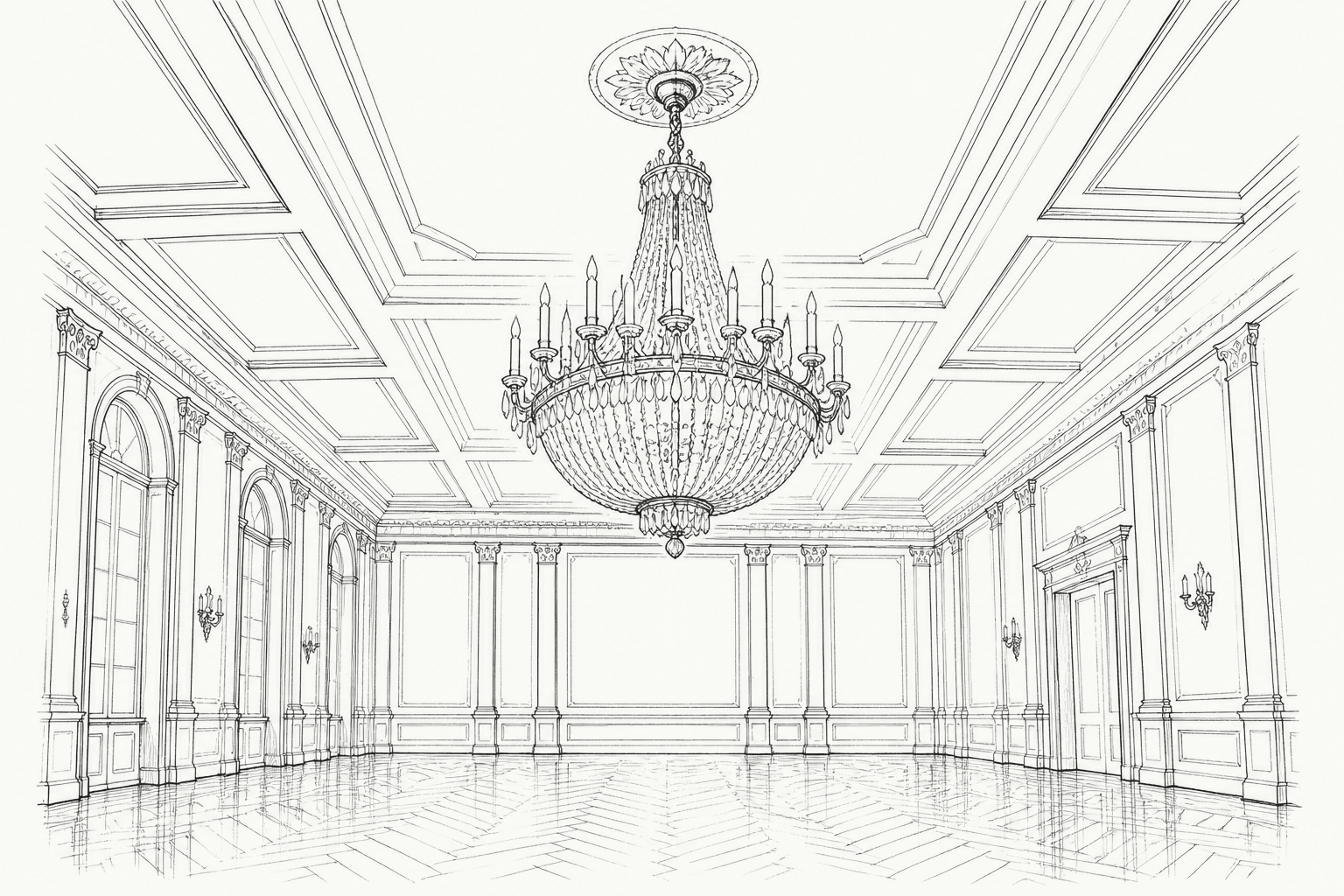
Senate Parliamentarian Elizabeth MacDonough ruled Saturday that the $1 billion the Republican immigration enforcement bill earmarks for the Secret Service to harden President Trump's planned East Wing ballroom does not qualify for the fast-track budget process Republicans are using, forcing the GOP to rewrite the provision or strip it before a Senate floor vote slated for next week.
The decision lifts the threshold for the ballroom money from a simple majority to 60 votes in a chamber Republicans control 53-47, a margin requiring Democratic support that has not materialized. It also injects uncertainty into a roughly $72 billion package built mainly around $70 billion for Immigration and Customs Enforcement and related agencies.
What the ruling says
MacDonough told Senate offices Saturday that the provision strayed outside the Judiciary Committee's writ. "A project as complex and large in scale as Trump's proposed ballroom necessarily involves the coordination of many government agencies which span the jurisdiction of many Senate committees," she wrote, according to NBC News. "As drafted, the provision inappropriately funds activities outside the jurisdiction of the Judiciary Committee."
The budget resolution underpinning the bill permits language to originate only from the Judiciary Committee and the Homeland Security and Governmental Affairs Committee. If a rewrite again falls outside those two panels' lanes, the funding likely comes out, NBC News reported, because Republicans cannot find the 60 votes needed to overrule the parliamentarian.
Inside the $1 billion
A memo shown to Republican senators this week and obtained by NBC News broke the $1 billion into $220 million to harden the White House complex, $180 million for a visitors screening facility, $175 million for training and $175 million to enhance security for Secret Service protectees.
Trump has said the ballroom, which he expects to be completed by September 2028, will cost $400 million and be financed with private donations. Comcast, the parent of NBCUniversal, is among the donors. The White House has said the taxpayer money would be limited to "security adjustments and upgrades" tied to the project.
Republicans on the fence
GOP leaders can afford to lose only three votes on the Senate floor. Sen. Rand Paul of Kentucky and Sen. Susan Collins of Maine have said the ballroom should be built with the private money Trump initially promised, NBC News reported. Sen. Roger Marshall of Kansas said after this week's briefing that he was "undecided."
Sen. Lisa Murkowski of Alaska told reporters the $180 million visitor checkpoint would be a "legitimate" use of taxpayer dollars but warned against bundling unrelated Secret Service requests into the bill. Murkowski said: "But if you're tacking on every ask that the Secret Service wants for the next three years and trying to roll that all into the cover of ballroom renovation, I think our job is to sort this out."
The response
Ryan Wrasse, a spokesman for Senate Majority Leader John Thune, called the ruling routine. "Redraft. Refine. Resubmit. None of this is abnormal during a Byrd process," Wrasse wrote on X, referring to the parliamentarian's review of reconciliation bills against the Byrd Rule's ban on extraneous provisions.
Senate Budget Committee ranking member Jeff Merkley of Oregon said in a statement that "the American people shouldn't spend a single dime on Trump's gold-plated ballroom boondoggle," adding: "Democrats are prepared to challenge any change to this bill." Senate Minority Leader Chuck Schumer of New York said his caucus would keep fighting "in the Byrd Bath, on the Senate floor with votes, and anywhere else Republicans try to raid Americans' hard-earned money for Trump's gilded palace," in a Saturday night statement.
The counterargument
Republicans frame the security money as a direct response to an April incident at a Washington black-tie media event attended by Trump, in which the Washington Examiner reported a shooting appeared to target the president. A Senate Judiciary Committee spokesperson told the Examiner that "conversations and revisions are continuing, as they have been for days," and Thune's office cast MacDonough's objection as a routine step in the Byrd process rather than a substantive verdict on the funding.
Multiple committee votes and a vote-a-rama, at which Democrats can again attempt to strip the $1 billion, are scheduled before the broader immigration enforcement bill reaches the Senate floor next week.