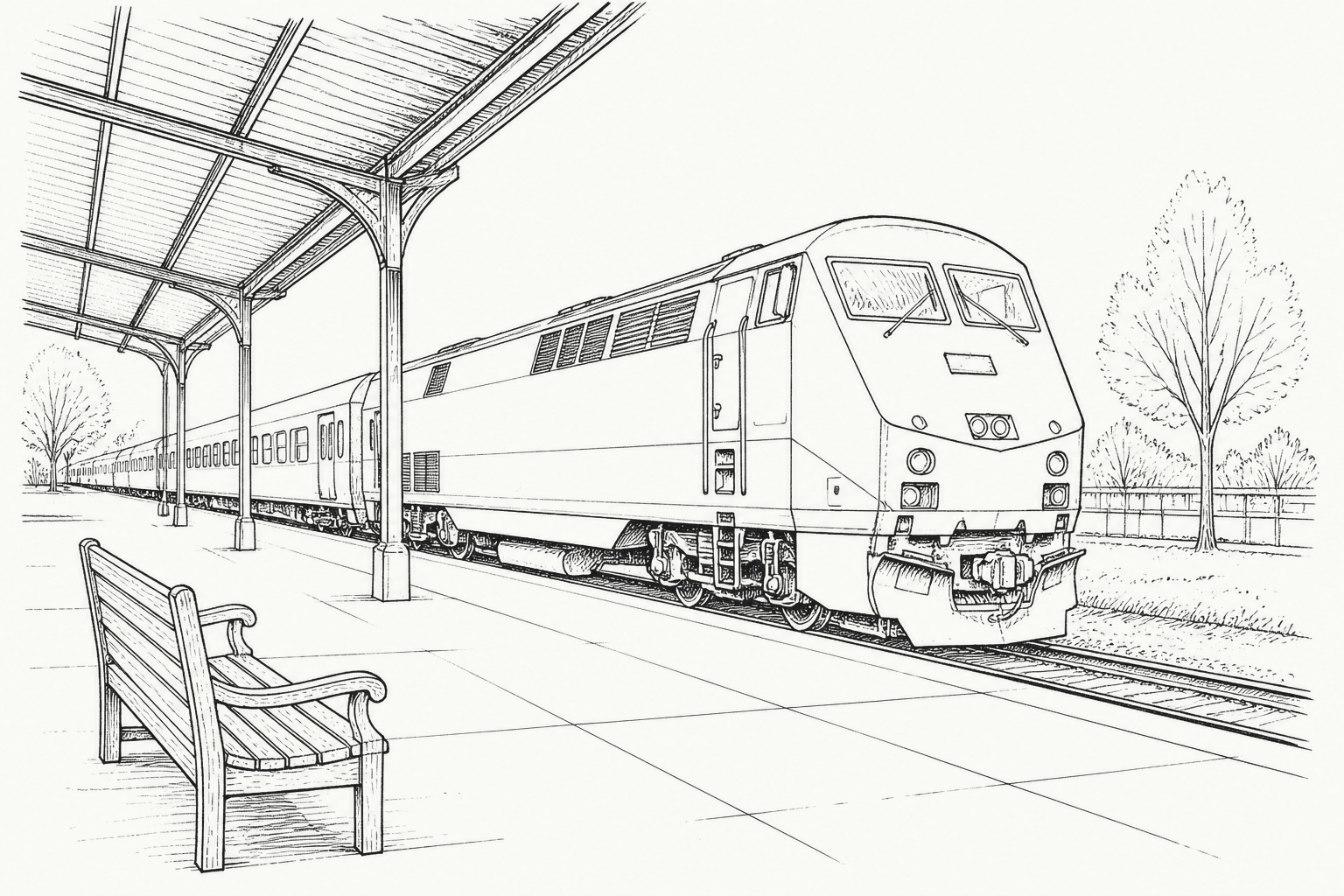
The Long Island Rail Road strike entered its second day Sunday with no new talks scheduled between the Metropolitan Transportation Authority and the five unions that walked off the job at 12:01 a.m. Saturday, leaving the roughly 250,000 weekday riders who depend on the busiest commuter railroad in North America without service heading into Monday morning.
Saturday's silence at the bargaining table coincided with an open political fight: Gov. Kathy Hochul called the walkout "reckless" and faulted the Trump administration for ending federal mediation early, and President Trump answered on Truth Social by calling the Democratic governor a "Dumacrat" and telling her the strike is her problem to fix. New York State Comptroller Thomas DiNapoli's office has estimated the shutdown is costing the region as much as $61 million a day.
What separates the sides
The Brotherhood of Locomotive Engineers and Trainmen said no further sessions had been set since Friday's talks collapsed. "We're far apart at this point," said Kevin Sexton, the union's national vice president. MTA Chairman Janno Lieber said the agency "gave the union everything they said they wanted in terms of pay" and that, to him, it was apparent the unions had always intended to walk out.
The substantive gap is narrow. The MTA had offered a 9.5 percent raise over three years, the same package other MTA-represented workers have accepted, and on Wednesday added what chief negotiator Gary Dellaverson described as the equivalent of a 4.5 percent raise in a fourth year, delivered as lump sum payments rather than as base-wage increases. The unions are holding out for a 5 percent base raise in that fourth year, on top of a retroactive 9.5 percent covering the past three years. The Washington Examiner put the remaining wage distance at about 1 percentage point.
"The difference between those two positions is not unbridgeable," Dellaverson said Wednesday. "It is describable simply in terms of money." A second flashpoint surfaced late Friday, when the union said the railroad introduced a proposal on healthcare contributions for new employees that had not been part of earlier bargaining.
Washington and Albany
Hochul, who faces reelection in November, said the unions "represent the highest paid workers of any railroad in the nation, yet they are demanding contracts that could raise fares as much as 8%, pit workers against one another, and risk tax hikes for Long Islanders. This is unacceptable." She also blamed federal mediators, saying "you cannot make a deal if one side refuses to engage in good faith."
Trump wrote on Truth Social that he had "never even heard about" the strike "until this morning." "No, Kathy, it’s your fault, and now looking over the facts, you should not have allowed this to happen," the president wrote. "If you can’t solve it, let me know, and I’ll show you how to properly get things done." The unions had earlier asked the Trump administration to convene an emergency board; two federal panels appointed by the president recommended the MTA offer the unions more money, in non-binding findings.
Nassau County Executive Bruce Blakeman, the Trump-endorsed Republican running against Hochul, said "Hundreds of thousands of Long Islanders woke up to chaos because Kathy Hochul failed to do her job." New York City Mayor Zohran Mamdani said his office would "closely monitor the ongoing contract negotiations involving the LIRR" and urged commuters to plan alternative routes.
The Monday problem
The MTA is running a limited shuttle-bus service on weekdays from six designated LIRR stations to subway stops in Queens, reserved for essential workers and those who cannot work from home. The agency has acknowledged the buses cannot absorb a normal weekday load.
Lisa Daglian, executive director of the Permanent Citizens Advisory Committee to the MTA, said remote work is not an option for many riders. "You work in construction, you work in the healthcare industry, you work at a school or you're about to graduate from school, that's not always possible," she said.
The LIRR last struck in 1994; that walkout lasted two days. With Memorial Day weekend approaching and no talks on the calendar, Monday's first canceled rush hour will push the current shutdown past that benchmark.