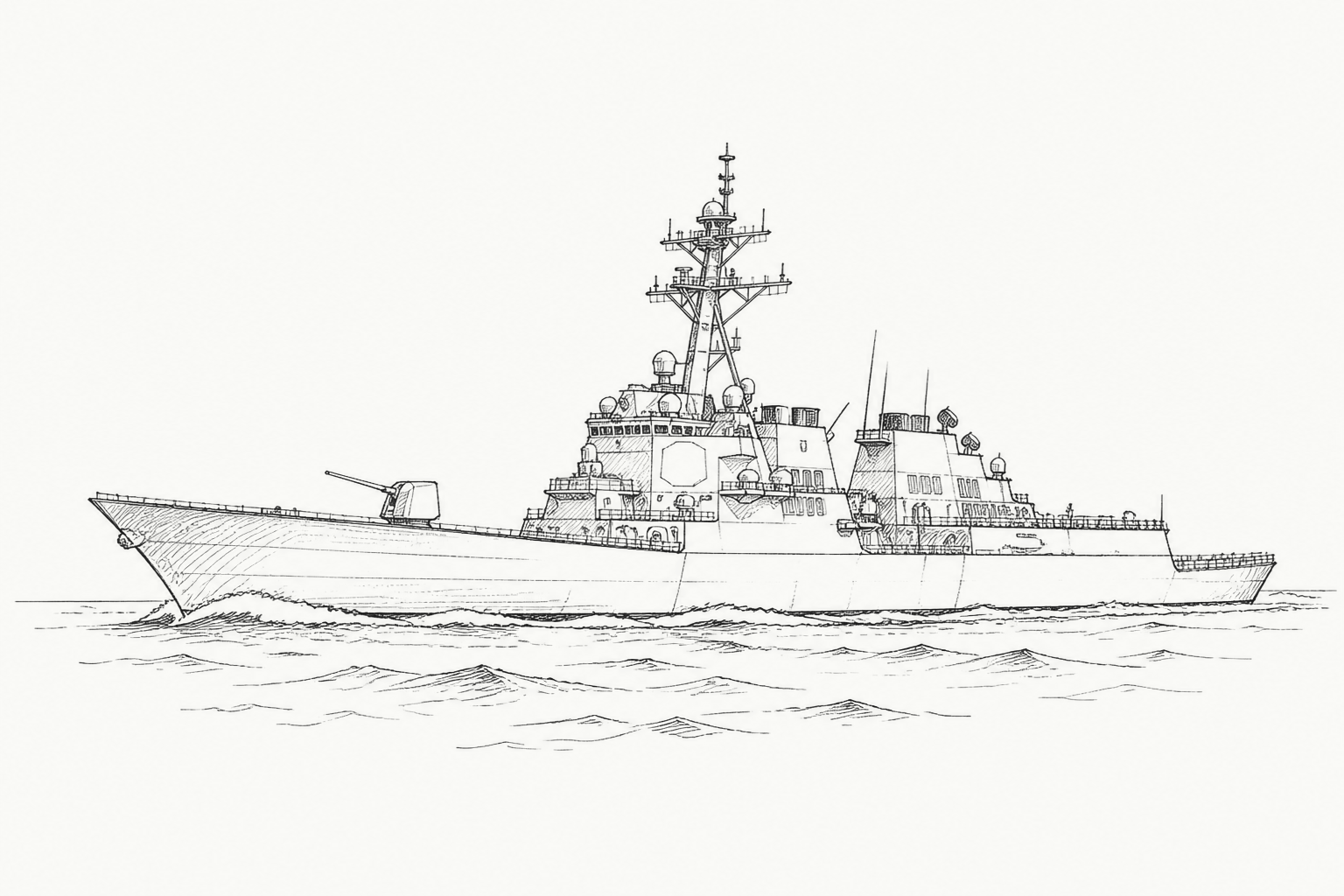
Two U.S. Navy destroyers transiting the Strait of Hormuz drew Iranian fire late Thursday, and U.S. Central Command answered with strikes on the Iranian port of Bandar Abbas and military sites on Qeshm and at Minab in what U.S. and Iranian officials each described as the most serious exchange since the April truce. Both governments said the ceasefire remains in effect.
The clash punctures the assumption that has guided oil and shipping markets for a month: that a Pakistani-brokered framework would gradually reopen the world's most important oil chokepoint. Instead, traders on Friday were pricing a longer disruption, with Brent crude trading above $100 a barrel and war-risk premiums for Hormuz transits running at roughly eight times pre-war levels, according to data from eToro cited by CNBC.
What CENTCOM hit
A U.S. official told PBS NewsHour foreign affairs correspondent Nick Schifrin that the destroyers were transiting the strait when they came under attack. CENTCOM said in a statement that it "eliminated inbound threats and targeted Iranian military facilities responsible for attacking U.S. forces, including missile and drone launch sites, command-and-control locations and intelligence surveillance and reconnaissance nodes."
An Iranian official told Schifrin the U.S. strikes hit the port at Bandar Abbas, a loading dock and a garrison. CENTCOM also struck Qeshm, the Iranian island across from Bandar Abbas, and Minab on the mainland nearby. Iran's military command accused Washington of violating the ceasefire and said it would "respond powerfully." Schifrin noted that Tehran has used that phrase before. A U.S. official and an Iranian official each told him the strikes were not intended to end the truce.
A different transit
Thursday's crossing was itself a departure. The two destroyers had begun transiting the strait only earlier this week, Schifrin reported, after staying out of it during the war that began Feb. 28. President Trump on Tuesday paused Project Freedom, the Navy escort operation that began Monday, to give Pakistani-brokered negotiations room to produce a single-document agreement.
In a call with an ABC News reporter Thursday, Trump said the ceasefire still held and described the strikes as "just a love tap," according to CNBC. He had warned a day earlier that Iran would be bombed "at a much higher level" if it did not agree to terms.
On the Street
Markets responded with a new shorthand. Trading desks have begun referring to the NACHO trade — "Not A Chance Hormuz Opens" — to describe positioning for a prolonged disruption rather than a quick deal. Brent peaked at $126 a barrel at the end of April and has tapered, but Friday's price remained more than 38 percent above pre-conflict levels, CNBC reported.
"It's essentially the market losing hope in the chance of a quick fix," eToro market analyst Zavier Wong told CNBC. War-risk premiums for Hormuz transits surged to roughly 2.5 percent of a vessel's hull value per voyage at their March peak, up from about 0.1 percent before the war, according to Wong, and remain about eight times pre-war levels.
State Street Global Advisors analysts wrote that the NACHO trade is unfolding alongside the older TACO trade — "Trump Always Chickens Out" — and that markets still require a "tangible peace deal" before pricing in faster Federal Reserve rate cuts. Aviva Investors strategist Vasileios Gkionakis said rates markets are repricing for a longer energy shock, with the front end of the curve moving sharply higher and most yield curves flattening.
The shipping math
The practical disruption has not eased. Air Force Gen. Dan Caine, chairman of the Joint Chiefs of Staff, said Tuesday there are more than 1,550 vessels with about 22,500 mariners inside the Persian Gulf, according to the Associated Press. Daily Hormuz transits, which ran 100 to 135 vessels before the war according to Lloyd's List Intelligence, have slowed to a trickle as Iran has demanded that ships pass through a vetting process run by the Islamic Revolutionary Guard Corps.
The IRGC process requires ships to follow a route near Iran's coast, submit crew and cargo information and in some cases pay a fee. Paying the IRGC, which the U.S. and EU have designated a terrorist organization, risks running afoul of sanctions. A CMA CGM container ship was damaged Wednesday while attempting to transit the strait, the French shipping company said, and Hapag-Lloyd has said the situation is costing it $60 million a week with four of its 301 ships stranded in the Gulf.
The counterpoint
Reporting in today's record draws entirely from center-leaning U.S. outlets — PBS NewsHour and CNBC. Iranian state media and opposition framings of the Bandar Abbas strikes are not represented in the body-tier set, and Tehran's account of casualties or damage at the port had not been independently corroborated by Western reporting at press time. The U.S. and Iranian officials cited by Schifrin both said the strikes were not designed to end the ceasefire, but only one side's military bases were hit Thursday, and Iran's stated position is that Washington fired first.
A meeting Wednesday between Iranian and Chinese diplomats emphasized de-escalation, the Associated Press reported. Verisk Maplecroft energy analyst Kaho Yu said tanker traffic and energy flows will matter more than diplomatic language in judging whether Beijing can convert its influence with Tehran into stability. The next test is whether the weekend passes without a further exchange.