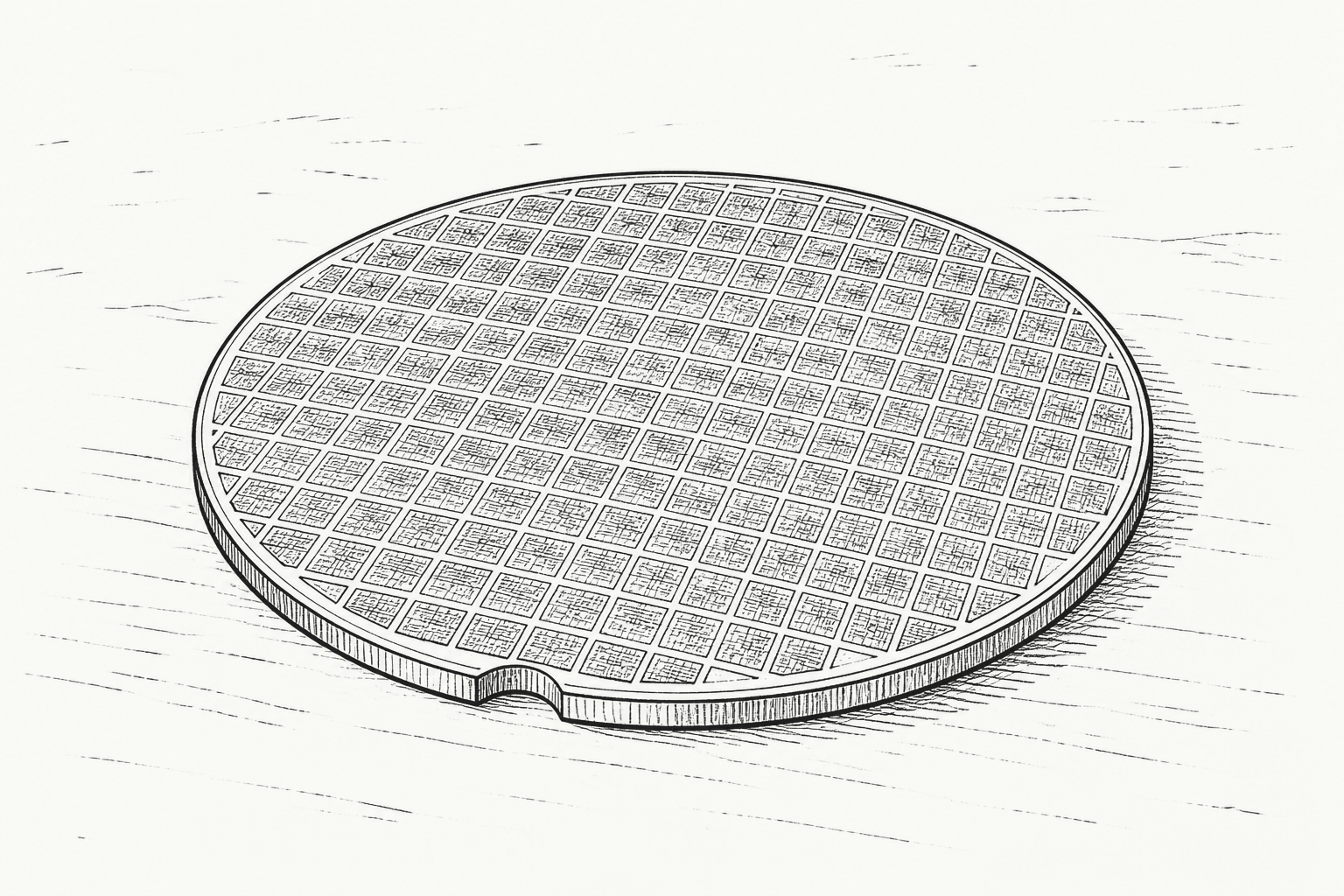

Samsung Electronics on Wednesday became the world's second Asian company to carry a $1 trillion market capitalization, after its Seoul-listed shares jumped more than 15 percent on record quarterly earnings and reports of a chipmaking deal with Apple. The milestone, reported by The Verge, lands the same day Advanced Micro Devices said its first-quarter data center revenue reached $5.8 billion and total revenue rose 38 percent from a year earlier.
The twin disclosures cap a week in which the AI hardware trade has detached from the rest of the equity market, with chipmakers, hyperscalers and the private AI labs that buy from them all booking record numbers. Samsung joins Taiwan Semiconductor Manufacturing as the only Asian companies in the trillion-dollar club, a bracket built on demand for the high-bandwidth memory and logic dies that train and serve large models.
What Samsung sold
Samsung's stock move followed reports of a potential chipmaking arrangement with Apple, The Verge said, alongside the record earnings the company announced the same day. The Apple talks, if completed, would broaden Samsung's foundry book at a moment when AI buyers are competing for advanced-node capacity.
AMD's data center quarter
AMD's quarter was driven by the same buyer base. Chief Executive Lisa Su told analysts that data center sales are now "the primary driver of our revenue and earnings growth." The unit's $5.8 billion in first-quarter sales pushed total company revenue up 38 percent year over year. Client and gaming revenue grew 23 percent to $3.6 billion, AMD said, even with weaker semi-custom sales for game consoles. The company and Intel's joint x86 industry group recently announced a new instruction set, AI Compute Extensions, intended to narrow the performance gap between CPUs and GPUs as AI agents push more inference work onto general-purpose processors.
The capex flowing in
The purchasing on the other side of those invoices kept escalating this week. OpenAI is forming a $10 billion venture with Brookfield and Bain Capital to deploy its products inside large enterprises, Bloomberg reported, according to Semafor. Anthropic announced a $1.5 billion joint venture with Wall Street firms that will function as a consulting arm, Semafor said, and on Tuesday rolled out a slate of agents aimed at financial-services tasks including reviewing balance sheets and drafting pitch decks; shares of incumbent market-intelligence vendors fell on the news.
Goldman Sachs analysts cited by Semafor estimate "20% of US businesses have adopted AI tools, mostly to supplement a small number of employee work tasks," leaving most of the addressable enterprise market still to be sold into. The chief executives of JPMorgan Chase and BlackRock on Tuesday dismissed concerns of an AI bubble, Semafor reported.
The labor side
The spending is reshaping payrolls as fast as it is reshaping income statements. Coinbase said it will lay off 14 percent of its staff, citing the use of AI to pivot toward what the cryptocurrency exchange called "one-person teams," in which a single employee acts as engineer, designer and product manager. Anthropic's new financial-services agents target the same junior analyst tasks that JPMorgan and BlackRock leaders insisted on Tuesday will keep generating returns rather than threatening them.
The missing skeptic
No bear case appears in today's body sources. The most prominent voices on valuation in the wires that crossed Tuesday and Wednesday are the heads of JPMorgan Chase and BlackRock, both of whom Semafor reported as dismissing AI bubble concerns rather than raising them. No Federal Reserve official, hedge-fund letter or short-seller surfaced in the dossier to contest the trade in current numbers, and no representative of the AI labs or chipmakers offered a contrary view of demand on the record.
AMD reports in detail to investors later this week, and Samsung's annual general meeting in Suwon will be the next venue at which executives address the Apple talks on the record.