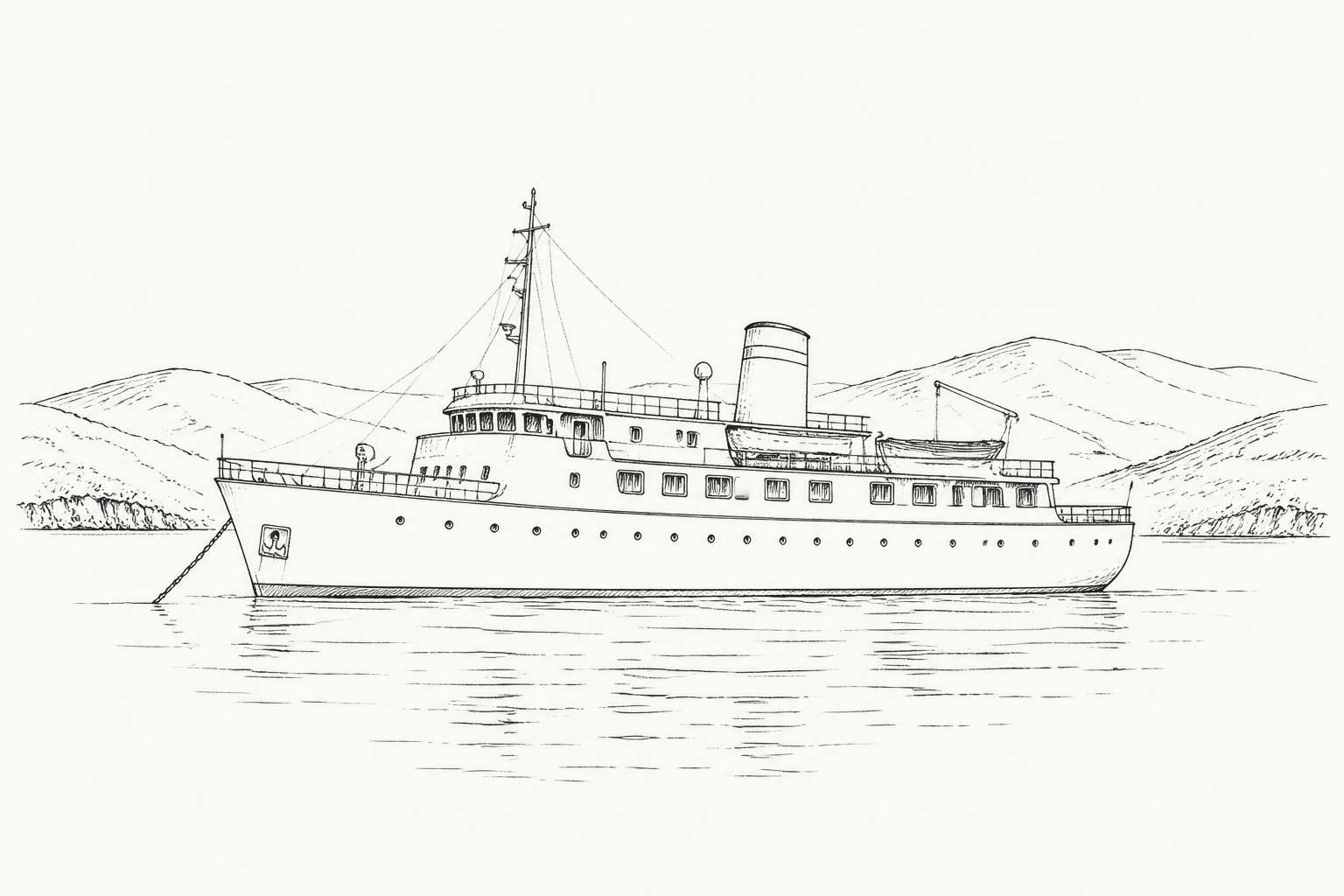
The World Health Organization and South Africa's Department of Health said Sunday that a suspected outbreak of hantavirus aboard a cruise ship in the Atlantic Ocean has killed three people and sickened at least three others, with the Dutch-flagged MV Hondius now anchored off Cape Verde and barred from disembarking passengers. WHO said one infection has been laboratory-confirmed and five more are suspected, and that the agency is working to evacuate two symptomatic crew members still onboard.
Hantavirus is rarely logged at sea. The family of viruses spreads chiefly through contact with the urine, saliva or feces of infected rodents, and outbreaks generally cluster in rural areas where people encounter wild rats and mice. A shipboard cluster spanning a route from Argentina to Africa raises questions about how the pathogen reached the vessel and whether close quarters allowed person-to-person transmission.
What is hantavirus
The U.S. Centers for Disease Control and Prevention says hantaviruses cause two serious syndromes: hantavirus pulmonary syndrome, which attacks the lungs and kills more than a third of U.S. patients, and hemorrhagic fever with renal syndrome, which damages the kidneys. There is no specific treatment or cure, but early medical attention can increase the chance of survival.
WHO said in a statement that "While rare, hantavirus may spread between people, and can lead to severe respiratory illness and requires careful patient monitoring, support and response."
On the ship
The MV Hondius left Ushuaia, Argentina, about three weeks ago on a cruise that took it to mainland Antarctica, the Falkland Islands, South Georgia, Saint Helena, Ascension Island and Cape Verde, with Spain's Canary Islands as the planned final stop, the South African health department said. About 150 passengers were aboard, along with roughly 70 crew members, according to online tour operators that list the Hondius as a specialist polar cruise ship.
The first to fall ill was a 70-year-old man who died on the ship; his body was offloaded at Saint Helena, the department said. His 69-year-old wife collapsed at a Johannesburg airport while attempting to fly home to the Netherlands and died at a nearby hospital. A British national who became ill between Saint Helena and Ascension Island was transferred to Johannesburg, where he is in intensive care and has tested positive, spokesperson Foster Mohale said. Details on the third death were not immediately available. Oceanwide Expeditions, the Dutch operator, said the third victim's body remains onboard.
What WHO is doing
"WHO is aware of and supporting a public health event involving a cruise vessel sailing in the Atlantic Ocean," the agency said. "Detailed investigations are ongoing, including further laboratory testing, and epidemiological investigations. Medical care and support are being provided to passengers and crew. Sequencing of the virus is also ongoing."
The WHO's regional director for Europe, Dr. Hans Henri P. Kluge, said in a Monday statement carried by Reuters, "The risk to the wider public remains low. There is no need for panic or travel restrictions." South Africa's National Institute for Communicable Diseases is conducting contact tracing in the Johannesburg region.
At Cape Verde
Cape Verdean health officials told Reuters on Monday the situation is under control and there is no risk to people on land, but they will not allow the Hondius to dock at the port of Praia, the capital. The Dutch foreign ministry told Agence France-Presse it is "busy looking at the possibilities to medically evacuate a few people from the ship."
The investigation is in its early days. Only one of the six cases has been laboratory-confirmed; the rest are classified as suspected, and sequencing of the virus is still underway. Officials have not publicly linked the deaths to a single source, and the cause of the third fatality has not been disclosed. This is a developing story.
Next steps hinge on Cape Verde. WHO said it is coordinating a medical evacuation of the two ill crew members and a full public health risk assessment for those who remain aboard. Until that decision comes, the Hondius will sit at anchor off Praia with a body in its hold and a virus that, until this weekend, had almost never been logged at sea.