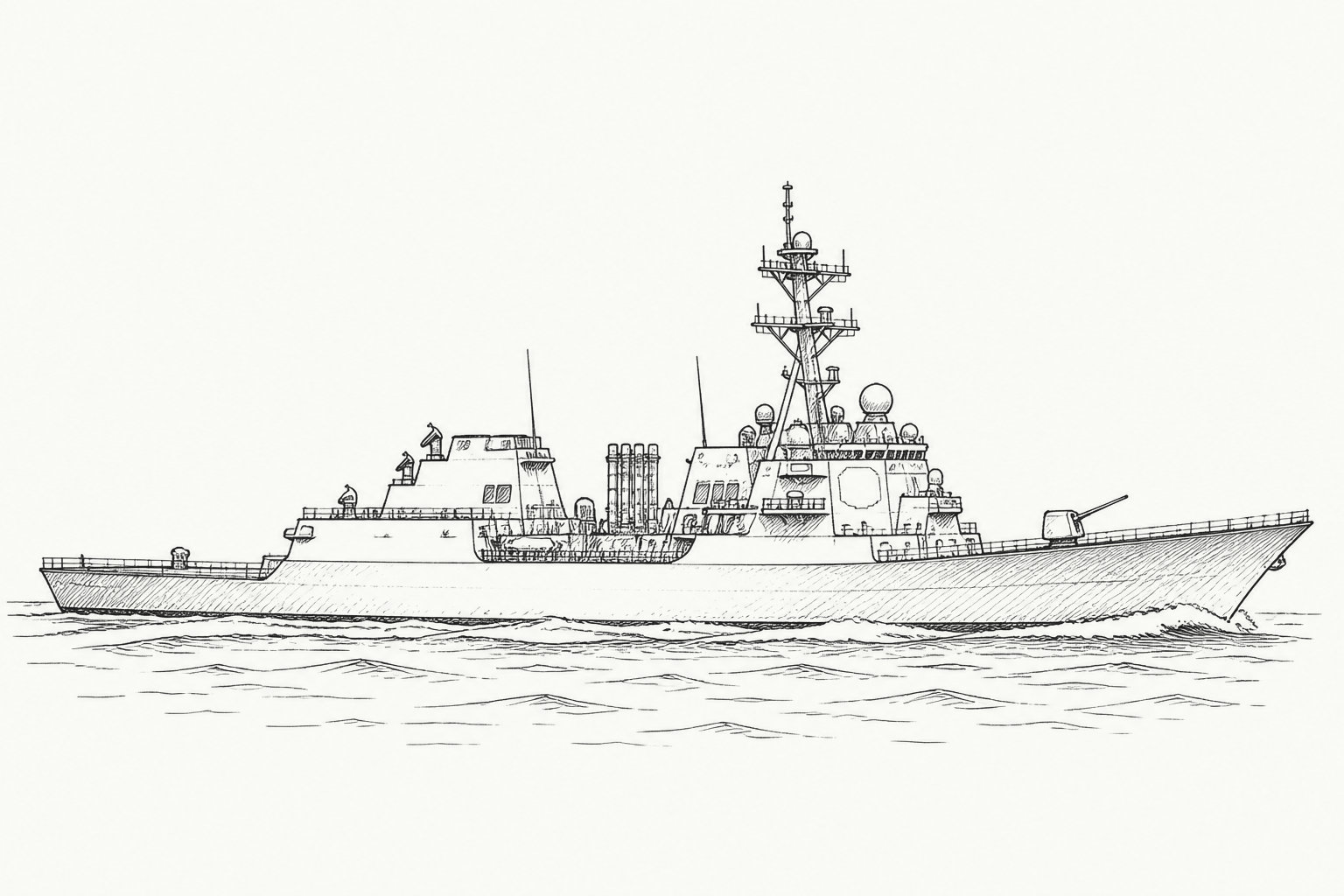
Two U.S.-flagged merchant vessels transited the Strait of Hormuz on Monday under cover of U.S. Navy guided-missile destroyers, the opening operation of President Trump's "Project Freedom" effort to break Iran's two-month chokehold on the waterway. Within hours, Iran's Fars news agency said two missiles had struck a U.S. warship at the southern end of the strait, a claim U.S. Central Command rejected.
The launch was the first American military movement through the strait since Tehran closed it after the U.S. and Israel began their war on Iran on Feb. 28, and it turned a months-long shipping standoff into a live test of whether the three-week-old ceasefire can survive contact between U.S. and Iranian forces in waters that carry roughly a fifth of the world's oil and natural gas trade.
What shifted
CENTCOM said "U.S. Navy guided-missile destroyers are currently operating in the Arabian Gulf after transiting the Strait of Hormuz in support of Project Freedom" and that "2 U.S.-flagged merchant vessels have successfully transited through the Strait of Hormuz and are safely headed on their journey." The command said it had established an "enhanced security area" south of the usual shipping lanes and urged mariners to coordinate with Omani authorities. CENTCOM did not say whether the destroyers escorted the merchant ships or supported them by other means.
The operation will draw on more than 100 land- and sea-based aircraft, unmanned platforms and 15,000 service members, according to CENTCOM commander Adm. Brad Cooper. Trump announced the effort Sunday, calling stranded crews "victims of circumstance" and warning that any interference would be dealt with forcefully.
On the water
Iranian military commander Ali Abdollahi said Monday the U.S. Navy would face attack if it entered the strait. "We warn that any foreign armed forces, especially the aggressive US army, will be attacked if they intend to approach and enter the Strait of Hormuz," the statement said, according to Al Jazeera.
Fars, which is affiliated with Iran's Islamic Revolutionary Guard Corps, then reported that two missiles had hit an American frigate. CENTCOM spokesman Capt. Tim Hawkins told CBS News the report was untrue, and the command issued a written statement: "No U.S. Navy ships have been struck. U.S. forces are supporting Project Freedom and enforcing the naval blockade on Iranian ports."
The day's confirmed incidents involved commercial shipping. The United Arab Emirates said a tanker affiliated with state energy company ADNOC was targeted by two drones in what its foreign ministry called an "Iranian terrorist attack," with no injuries reported. The British military's United Kingdom Maritime Trade Operations center said the threat level remains critical and advised reroutes through Omani waters.
What markets did
Global oil prices barely moved. Brent crude futures for July stood at $108.11 a barrel as of 0500 GMT Monday, down 0.06 percent, according to figures cited by Al Jazeera. Saul Kavonic, head of energy research at MST Financial in Sydney, told the outlet that traders are growing accustomed to Trump announcements about Iran "proving premature later on."
Goldman Sachs estimates the strait's closure and attacks on regional energy infrastructure have removed 14.5 million barrels of daily global production. Ship-tracking firm Windward counted 20 vessels crossing the strait on the most recent day for which figures were available, against a pre-war daily average of 129. U.S. retail gasoline averages $4.44 a gallon, up from less than $3 before the war, Al Jazeera reported.
Diplomatic track
The operation began as Iran was reviewing a U.S. counterproposal to the 14-point plan Tehran submitted last week through Pakistani intermediaries, an offer Trump said Saturday he doubted would yield a deal. Iran's Foreign Ministry spokesman Esmail Baghaei said Tehran is not engaged in nuclear talks at this stage. Pakistan separately said it had transferred 22 crew members from the U.S.-seized Iranian ship Touska as a "confidence-building measure."
U.S. Treasury Secretary Scott Bessent told Fox News on Sunday that Iran has collected less than $1.3 million in tolls from ships seeking safe passage and that Iranian oil storage is filling up so quickly that Tehran may have to begin shutting in wells within a week. The U.S. naval blockade of Iranian ports has been in place since April 13.
A European objection
French President Emmanuel Macron, speaking to fellow European leaders at a meeting in Armenia, said France would not join the American effort. "What we want above all is a coordinated reopening by the United States and Iran — that is the only solution for reopening the Strait of Hormuz," Macron said, according to CBS News. Paris frames Project Freedom as a unilateral move that risks shattering the ceasefire, and prefers a negotiated reopening that includes Tehran as a participant rather than a target.
Harlan Ullman, a former U.S. naval officer and chairman of the Killowen Group, told Al Jazeera that Iran's inventory of small craft and drones could test the operation severely. "Iran has huge amounts of drones and small craft that could make this very, very difficult," Ullman said.
CENTCOM has not announced a schedule for additional convoys, and the Pentagon has declined to say how many of the hundreds of stranded vessels will seek U.S. guidance. Tehran's deputy parliament speaker, Ali Nikzad, said Sunday that Iran will not return the strait "to its prewar conditions." The next test arrives with the next ship that asks for an escort.