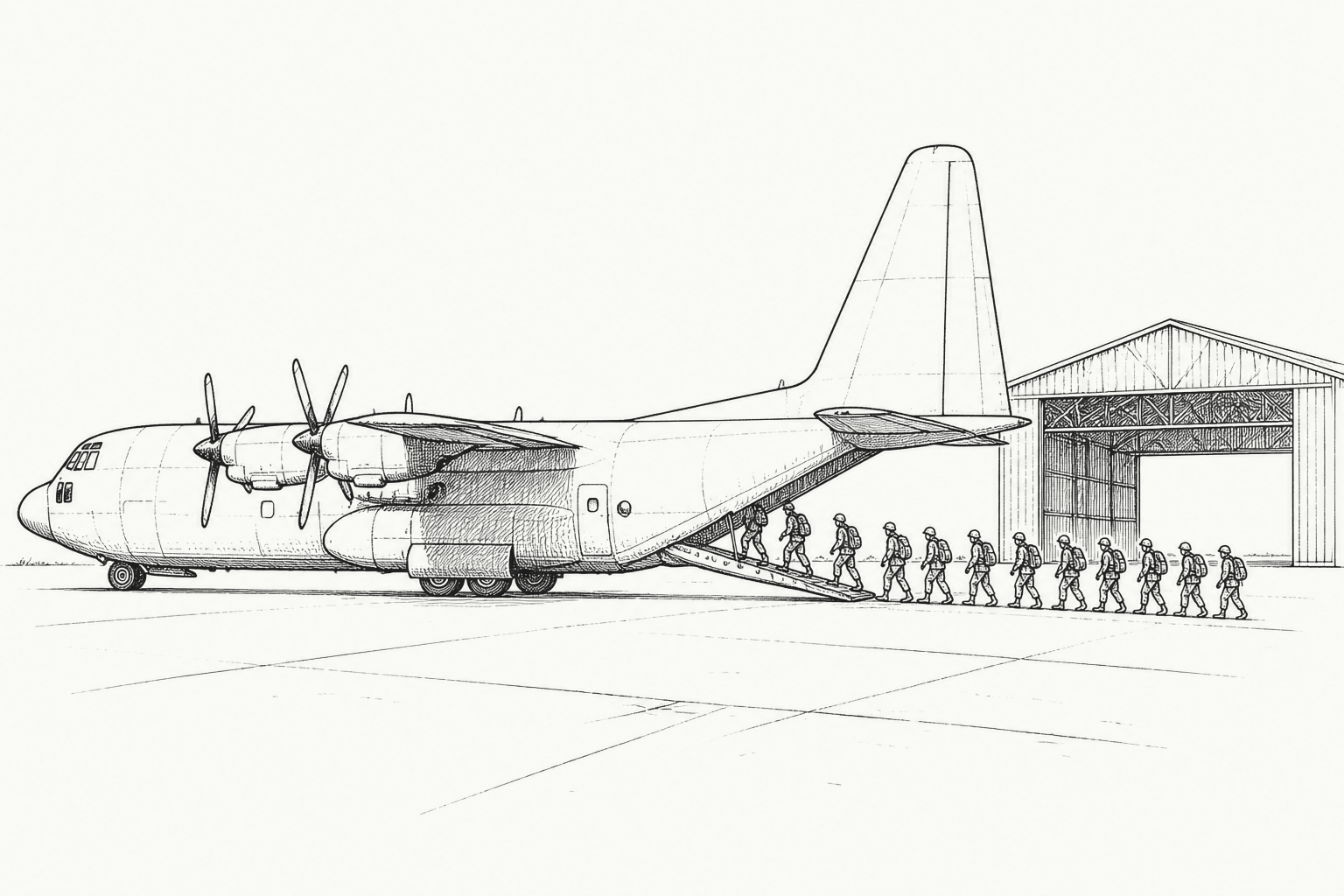
The Pentagon announced Friday that the United States will withdraw approximately 5,000 troops from Germany over the next six to 12 months, formalizing a cut President Trump first floated this week during a public quarrel with German Chancellor Friedrich Merz over the Iran war. The reduction equals about 14 percent of the 36,000 American service members currently stationed in the country, the largest U.S. troop concentration outside Japan.
The move converts a presidential threat into a defense order and lands on a NATO already strained by two months of fighting in the Persian Gulf, a closed Strait of Hormuz and Trump's recent description of the alliance as a "paper tiger." Germany hosts the headquarters of U.S. European Command and Africa Command, Ramstein Air Base and Landstuhl Regional Medical Center, the largest American hospital abroad, which treats troops wounded by Iranian strikes.
What the Pentagon said
Pentagon spokesman Sean Parnell said the "decision follows a thorough review of the Department's force posture in Europe and is in recognition of theater requirements." In a separate formulation reported by CBS News, Parnell tied the cut to "a thorough review of the Department's force posture in Europe and is in recognition of theater requirements and conditions on the ground." The withdrawal will include one brigade combat team currently in Germany, according to senior defense officials cited by CBS News. Some relocated forces may return to the United States before potential redeployment, with officials emphasizing priorities at home and in the Indo-Pacific. Operations at Landstuhl will not be affected.
On the Hill
Democratic lawmakers and outside defense analysts condemned the order. Sen. Jack Reed said the move "suggests American commitments to our allies are dependent on the president's mood" and called on the president to halt it. Bradley Bowman of the Foundation for Defense of Democracies said reducing the U.S. presence in Germany weakens deterrence against Russia and limits American power projection across Europe, the Middle East and Africa.
A 2023 statute prevents the president from withdrawing the United States from NATO without congressional approval, and Trump took a similar step toward a Germany drawdown in his first term that President Joe Biden formally halted in 2021.
The Merz quarrel
The Friday announcement followed a week of escalating public exchanges between Trump and Merz over the U.S.-Israel campaign against Iran. Merz, according to CBS News, said "the Americans clearly have no strategy" on Iran, prompting Trump to retort that the chancellor "doesn't know what he's talking about." In remarks reported by Al Jazeera, Merz framed the conflict in economic terms, saying "this war against Iran, has a direct impact on our economic output," and called for European nations to take on greater security responsibility. Trump separately told Merz to stop "interfering" on Iran and focus on domestic matters.
German Defense Minister Boris Pistorius said Berlin had anticipated the U.S. cut and was already expanding its armed forces, accelerating equipment purchases and upgrading infrastructure. NATO spokesperson Allison Hart said the alliance is "working with the US to understand the details of their decision on force posture in Germany," and added that the move reinforces Europe's obligation to "continue to invest more in defence and take on a greater share of the responsibility for our shared security." At last year's NATO summit in The Hague, member nations committed to lift defense spending to roughly 5 percent of their budgets, up from 2 percent.
The strategic read
Former U.S. diplomat Donald Jensen, quoted by Al Jazeera, said the reduction reflects a "changing US strategic set of objectives" and may foreshadow broader restructuring of European security arrangements, with more American personnel directed toward countering China, which Washington considers a more pressing threat than Russia. Pentagon officials echoed the Indo-Pacific framing in describing where the relocated brigade may eventually go.
The counterpoint
The administration cast the withdrawal as a routine posture review keyed to current theater requirements, not retaliation. The body-tier coverage available Friday skewed lean-left, and Republican lawmakers had not publicly criticized the decision by press time; the dossier contains no on-record GOP defense of the cut beyond the Pentagon's own statement. Pistorius's matter-of-fact reaction also undercuts the framing of the order as a rupture: Berlin says it saw the move coming and is moving to fill the gap.
NATO's review of the order is expected to run alongside the six- to 12-month withdrawal timeline that the Pentagon set Friday.