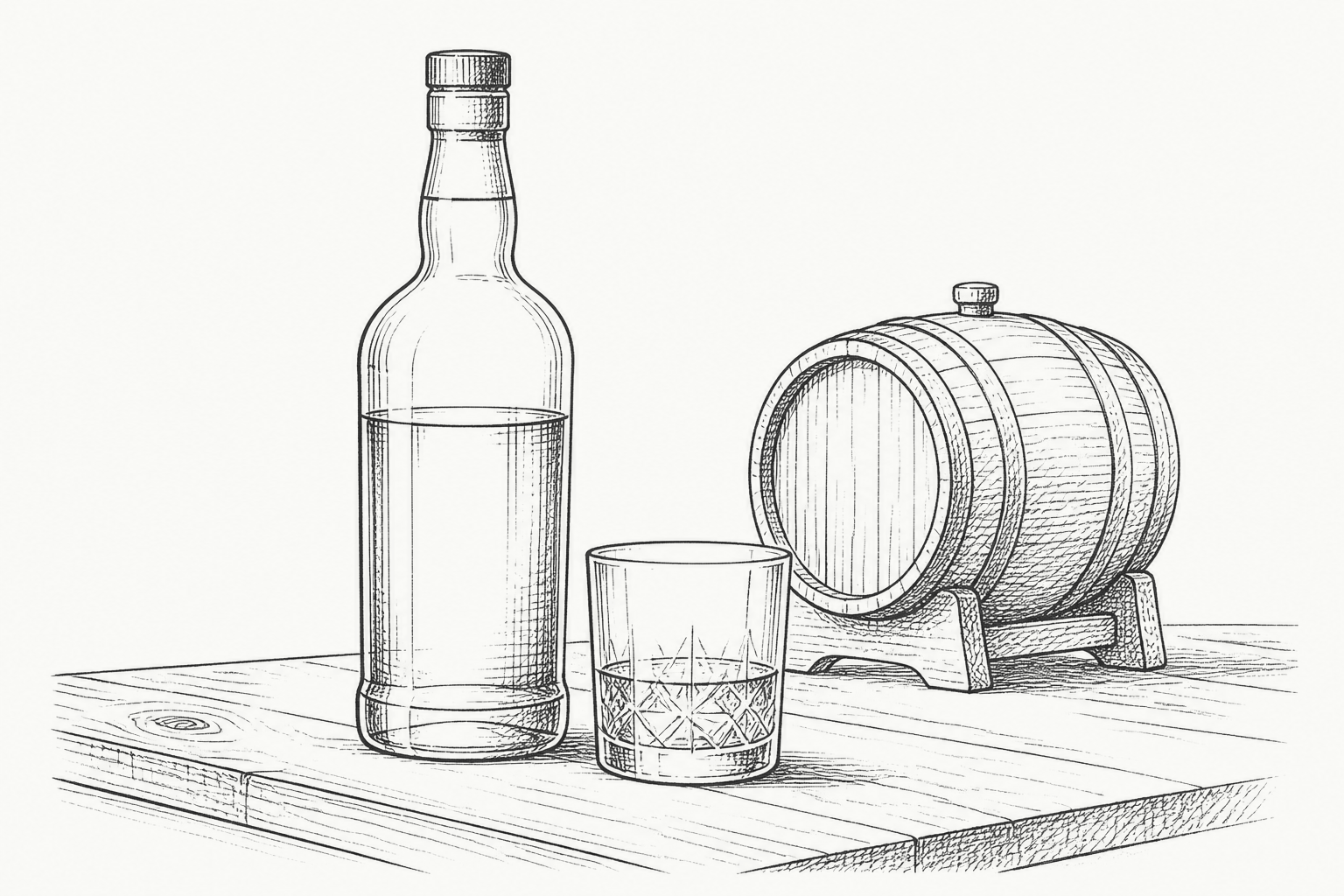
President Trump on Thursday lifted U.S. tariffs on Scotch whisky, crediting King Charles III and Queen Camilla for a concession London read as removing the 10 percent duty Trump imposed on British spirits in 2025.
The move restores zero-for-zero conditions for an industry that employs about 40,000 people in Scotland and arrives as the British monarch wraps a four-day state visit that diplomats and lobbyists credit with rescuing a relationship strained by disputes over Greenland and the Iran war.
A Truth Social decree
Trump announced the change in a Truth Social post as the king and queen departed Washington. "In Honor of the King and Queen of the United Kingdom, who have just left the White House, soon headed back to their wonderful Country, I will be removing the Tariffs and Restrictions on Whiskey having to do with Scotland's ability to work with the Commonwealth of Kentucky on Whiskey and Bourbon, two very important Industries within Scotland and Kentucky," he wrote.
"The King and Queen got me to do something that nobody else was able to do, without hardly even asking!" he added. Speaking to reporters, Trump said he "took all the restrictions off, so Scotland and Kentucky can start dealing again." The U.K. government confirmed Friday that the change applies to all whisky tariffs, including those on Irish whiskey.
Industry math
Whisky accounted for 23 percent of all Scottish goods exports in 2025, and the Scotch Whisky Association said in September that the duty was costing members 4 million pounds, or $5.44 million, per week in lost exports. U.S. export volumes fell 15 percent after the April 2025 tariffs took effect, the association said. A five-year suspension of a separate 25 percent tariff on single malts was set to expire in coming months.
Mark Kent, chief executive of the Scotch Whisky Association, said "Distillers can breathe a little easier during a period of significant pressure on the sector," calling the move a return to "zero-for-zero tariff trade for whisky and bourbon." Chris Swonger, president of the Distilled Spirits Council in the United States, said the action "strengthens transatlantic ties, brings much‑needed certainty to our industry and allows spirits producers on both sides of the Atlantic to grow, invest and support jobs at a critical time."
Scotland's First Minister John Swinney called the outcome a "tremendous success" and said "People's jobs were at stake," with "Millions of pounds were being lost every month from the Scottish economy" before the duty came off. Buckingham Palace said the king "will be raising a dram to the President's thoughtfulness and generous hospitality as he departs the U.S."
What is unclear
Trump's post did not specify whether the relief covers bottled Scotch, the bourbon barrels Kentucky distillers ship to Scotland, or both, and the White House did not respond to requests for clarification. Scottish officials and U.S. industry groups read it as full removal of the 10 percent duty. The dossier reflects only center-leaning wire coverage; voices arguing the broader U.K. tariff regime should remain intact as leverage in disputes over Iran and Greenland are not represented.
The concession leaves the wider U.S.-U.K. trade framework in place and tests whether soft-power diplomacy can move other files. Prime Minister Keir Starmer, whose relations with Trump frayed in recent weeks, inherits a tariff win he did not negotiate, courtesy of a king Trump on Tuesday labeled a "great friend" at the state dinner.